Wednesday, March 31, 2010

Reviving the Spirit


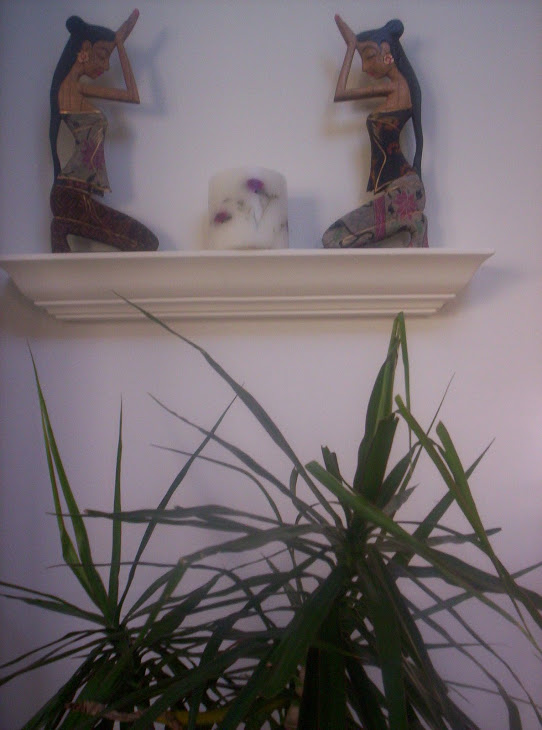
(Today Chicago was sunny and robustly alive with nature and life in full abundance!)

Many of us realize early on that this journey called life is not a dress rehearsal and so we begin in earnest to try to understand the lessons and challenges that confront us. We are all challenged in vastly different ways. Some of us have been wounded by assaults on our spirits that come in the form of attacks on our personhood and identity as women as people of color as seniors. This may result in individuals becoming unsure of themselves, second guessing themselves. Their self esteem may plummet. Such individuals may demonstrate distrust and appear unresponsive and shut down. Others that have been the victims of mean spirited behaviors might withdraw and become defensive as a way to protect themselves. Still others react and become recluses. Why some individuals experience hard times and never catch a break while others seem to fare better and are the recipients of generous gifts of time, money and friendships is cause for speculation. Regardless of which category you fall into we can all benefit from a "Revival of the Spirit." Giving in to negative energy does nothing but attract more of the same. We have to remember that we are spiritual beings having a human experience. Every opportunity we get we should be feeding our souls and loving ourselves to reverse the negative energies that have settled in our lives.

Whether we cause the energy or not I believe that we are responsible for the transfer of the negative energy. We are vibrational beings and we can be invaluable to ourselves and others when we remember the following:

1. We are always in charge of the way we feel so do not subject yourself to feeling bad any longer!
2. We can create a life that meets and exceeds our wildest dreams! Why not get started! What do you have to lose except your chains and your depression?
3. The way we use our time will directly impact the quality of our lives. If you want to know what you think look at the results. How ya living!?

If the above is true then what keeps us from directing the way we feel and creating the lives we want for ourselves? Primarily fear! Fear drives us to remain in our comfort zones - our misery. And we know that misery loves company. Yet, we all say that we all want good health, personal development, good relationships, dynamic careers, financial abundance, fun filled lifestyles.

Besides releasing the fear what would we need to do to have these things?
1. Get clear about our priorities. We are all over the place. Get still and get clear about what you want and then tell the Universe. And do it with preciseness and clarity! The clearer you are the clearer the energy vibrations working on the demonstration of your request will be!
2. Become attuned to your feelings. We have to process what we are feeling. Our emotional incompletions cause us to create a casing around our hearts so that we do not have to feel. We have to get rid of the junk/stuff around our hearts. We have our work cut out for us! But it will be worth every minute of it! Have fun in the process! Attend some workshops! Find a group of like minded individuals and hang out with doing these things!
3. Learn to communicate in the moment. If we do not do this we continue to create h baggage that we are always working to heal so we always have a back log. Why not ask for what we need in the moment. Tell the truth with love and compassion. Most importantly, tell the truth to yourself. Request specific help from the Universe and connect with your strengths. What do people commend you for? What rocks your world? These are the things you should go after.
4. Find/create a support system that allows you to take back your life! If your broken script (and it is broken) asks you who do you think you are? Remind yourself that you are a child of the Most High! You no longer have permission to abuse and neglect yourself!God don't make no junk!
5. Let go of the negative stressors in your life. They rob us of our healing powers. Stress robs us of the ability to flow with life and to take authority over our lives. Begin with your health! Stuck energy due to poor diet and stress and unhealthy life styles coupled with deep rooted pain blocks your energy and keeps us from claiming a healthy and full life.

What does a healthy you look like? Walking and stepping in our greatness! It is time for us to stand in our greatness! The world needs us! Our children need us! Every situation in your life is talking to you. Your life is talking to you. It is time to forgive! It is time to give it over and give it up. Bring some joyu in your life!

We must commit to daily spiritual practices such as prayer, meditation, affirmations, visualizations, chanting, dancing, music, walking, execercise, singing etc.

Tomorrow I will begin to meditate from 6:30 am to 7:00 am. It is time to get still and hear that small quiet voice inside speaking to you!The following emotions are stored in our organs:

liver - anger & depression
spleen - worry
lungs - grief & sorrow
kidney - fear
heart - joy


I leave you with the following words of wisdom:

1. Don't let your circumstances continue to dictate your life! Increase your flow of abundance.
2. Realize that you are already great! Are you going to allow it to shine?
3. Develop an attitude of gratitude for what you already have.
4. Increase your flow of abundance
5. Walk into your heart and experience more joy

Question: What does a healthy lifestyle look like for you? Describe your life in 20 words or less. What is it you want in life? If you do not have it - why not? How can you focus on what you want and not on what you don't want?

Blessings! Rev. Qiyamah

Tuesday, March 30, 2010

Ima Gontellit


The title for this post comes from a small local Chicago paper that I recently picked up. The columnist's weekly reflections titled, The Chatterbox, and written under the name of "Ima Gontellit" is a compilation of all the political, social and entertainment news in the city.

I am taking license to gather my reflections and comings and goings using this very entertaining title. It is far more creative than my usual, Odds N Ends, that allows me free rein to wrestle my unruly life into a post and send it forth into the world.

I currently have a pain running from my left arm that started this morning. I had intended to workout. I did manage to find the time yesterday. But having gotten busy with work things today I postponed the workout. The pain has now proceeded into my left leg. It is not unbearable but I know that pain is my body's way of communicating to me. So as soon as I finish this post I am going to make myself a nutritional drink and then work out. After that I can expect to be engaged in a couple hours of conference calls - all dormant and passive activities. I have already checked emails and responded to several, begun a couple of future sermons and talks, organized my things-to-do list and actually whittled it down and organized the piles of papers and gotten them to almost disappear and at least appear manageable.lol I really have been busy working and yet the question I pose in the face of a potential health situation is, " In the grand scheme of things, what have I done that made a difference to the world and others today?"

I used to struggle with this question until I recently realized this small truth - I matter! My life matters as much as the work that I am doing! I matter! I am a manifestation of the Divine and I am the vessel and vehicle designated to do the work! And when I take care of myself I am affirming that I matter! When I take care of myself I am maintaining the unique temple that allows me to move about and have a presence in the world to do this important work that is critical enough to exhaust me and keep me up at night and causes me to rise early in the morning and keeps me toiling in the vineyard. Some of you know what I am talking about! My body is the instrument that allows me to do the work that I have uniquely claimed that no one else can do like Qiyamah can do. So there - thank you Spirit for reminding me that I am important and that instead of doing the ten things that I was going to do I will put a pin in my post and a "to be continuned" and go and exercise this body which is needing to move itself in a way to relieve the discomfort. How do I know that? Because I know my body. Just because I do not listen to it does not mean I have not taken the time to understand it and work with it.

Question: What is your body trying to tell you? Are you listening? What is the relationship between the sacred work that you are called to do and the body that you have been given and blessed to work with? Do you take it for granted?
Blessings! Rev. Qiyamah

Saturday, March 20, 2010

Gender Violence, Human Rights and Clergy Sexual Misconduct


A Nation is not conquered until the hearts of its women are on the ground. Then it is finished. No matter how brave the warriors or how powerful the weapons.
--Cheyenne Indian proverb

Gender Violence, Human Rights and Clergy Sexual Misconduct

Human rights in the last few decades has provided a significant framework for global women’s movements while advancing women’s rights as human rights. One of the primary issues impacting women regardless of their country’s gross national product or labels that designate countries as developed or developing is gender based violence. Globally, gender based violence appears to be the primary cause of most violent attacks on women. As a result, gender violence has achieved global visibility due to its pervasive nature. According to Charlotte Bunch, a significant number of women worldwide are routinely subjected to “torture, starvation, terrorism, humiliation, mutilation and murder.” Grave human rights violations against women continue unabated. Unfortunately, many of these violations are often condoned and sanctioned by legal systems and government policies. Gender based violence restricts women’s contributions and development in various ways including the familial, societal and economically. Gender violence often leads to the disintegration of families, medical problems, inability to fulfill employment obligations and even loss of life. Women’s abilities to live full and productive lives are restricted by gender violence. In retrospect, male violence against women and children has been a focus of feminist research and activists in the United States, Canada, Australia and Europe for over four decades with more recent growing concern in developing nations.

The crime of clergy sexual misconduct is just beginning to be acknowledged in developing countries and appears not to have surfaced on women’s agendas around the world. While most industrialized nations have established public policy to begin to address many forms of gender violence and to provide support services and interventions for the victims and perpetrators, clergy sexual misconduct has not yet demanded such systematic attention and services. Thus, in most countries around the world, clergy sexual misconduct has not yet been perceived as a social problem. Furthermore, it has been noticeably absent from the UN’s definition of gender violence as seen below:

"Gender violence refers to any act of gender-based violence that results in, or is likely to result in, physical, sexual or psychological harm or suffering to women, including threats of such acts, coercion or arbitrary deprivations of liberty, whether occurring in public or private life. Violence against women shall be understood to encompass but not be limited to: physical, sexual and psychological violence occurring in the family and in the community, including battering, sexual abuse of female children, dowry-related violence, marital rape, female genital mutilation and other traditional practices harmful to women, non-spousal violence, violence related to exploitation, sexual harassment and intimidation at work in educational institutions and elsewhere, trafficking in women, forced prostitution, and violence perpetrated or condoned by the State."

Clergy Sexual Misconduct in the United States
Until recently, little attention has been paid to clergy sexual misconduct and few statistics exist. The few that are available are oftentimes generated from denominational records which tend to be suspect and are often under reported. Findings generated in a study published, in 1992, revealed that the majority of denominations do not yet have any written policies and procedures, nor written materials addressing clergy sexual misconduct. By 1995, a number of experts had emerged identifying clergy sexual misconduct as a serious social problem.

Investigations of the Catholic Church sex scandals have resulted in a rather gloomy prognosis for the Catholic Church and the vocation of the priesthood. Father Norman Rotert, a priest of forty-two years fore casted the following pessimistic prognosis:
“The paternalistic attitudes, the increasing consciousness of women, the lack of appreciation for the value of celibacy, the large percentage of gay priests, the pedophilia crisis, all have so impacted our vocation recruitment efforts that I see no possibility of salvaging the priesthood as we know it today.”

It appears, that many, if not most religious institutions until fairly recently have acted with complicity and condoned clergy sexual misconduct by ignoring, denying and withholding information about the misconduct of its clergy. Overwhelmingly, religious systems as currently structured perpetuate the potential for such abuses of power against women and children. Thus, male privilege and power greatly impact the safety of women and children and compromise their quality of life. As a result critics were highly incensed by the church’s leadership reactions in the face of the scandal.

Thus, the rhetoric of contemporary social problems illustrates the fundamental importance of placing the interests of women and children in the forefront of clergy sexual misconduct. In the case of clergy misconduct, such a shift of emphasis can only partially undermine theological positions naming the problem as the sin of the individual but the behavior of social systems organized around patriarchy and dominance. The behavior exhibited by the clergy and many of the excuses articulated bears a strong resemblance to domestic violence and child abuse. The similarities include:
• In earlier years the behavior was not perceived to be abnormal or criminal conduct
• The perpetrators of violence against women and children are predominately males and the victims predominantly females and children.
• Males represent a disproportionate number of individuals that commit acts of violence
• Males violence against women and children appears to bear a correlation with their beliefs in women’s and children’s inferiority
• Males violent behavior manifests a cluster of behaviors directed against women and children that include rape, wife abuse, incest, pornography, and global sex trafficking (to name a few)
• Differences in power and privilege among men and women are often acted out in ways deemed detrimental to the well being of women and children.

Hence, gender violence is a significant barrier to social and economic development. Its existence produces an unsafe and hostile environment that is counterproductive to achieving a quality of life for women and children. Likewise, clergy sexual misconduct creates an unsafe and hostile environment for women and children seeking the solace of faith communities. Until we recognize this truth we cannot address this growing problem with individuals that come into faith communities looking for answers to questions of ultimacy (How can my life count for something?)and intimacy (How can I have meaningful connections with others?), nor can we offer the safety they should expect.

Come Back Queens


(This image reminds me that spring follows summer like joy cometh in the morning. Once again Chicago weather has betrayed me. It has gone from temperatures in the 70s to snow outside my window! Lord, save me from the cold! lol)

Strands of a song came to me today, "Something inside so strong - I know that I can make it. Something inside so bold - I know that I can make it." I remember other black women teaching me this song when I did not know it and then my singing it. These women and I were from the National Black Women's Health Project. Our mantra was, "Black and Female - I Know the Reality." The reality was that many of us we were "sick and tired of being sick and tired" and that many of us had suffered from being strong black women taking on life, often by ourselves and that some of us had been deeply wounded in the process of trying to get grown and happy in America. We were reminded by Lillie Allen that we all started out loving, zestful human beings who had lost our way in the maze of negative images and stereotypes heaped upon us. We learned and were reminded by hearing our stories that society had systematically imposed all kinds of -isms that assailed us from all sides, sometimes all at once. But together we could hold each other and love each other into wellness and release the traumas that our bodies held that were making us sick and killing some of us, while many of us died. Billye Avery told us her story. So we learned to tell our stories and spoke our truths amidst tears with babies sleeping in back rooms while hands and arms held us and reminded us that they we were good enough just as we were and that we deserved happiness and that we deserved the best that life could offer. And these hands and words helped many of us to walk through the terror of our lives to get to the other side of the joy waiting for us. These circles of sisters made all the difference for some of us. I know they did for me and my daughters (and I hope for my son). These circles did not cost anything other than our time and our commitment to ourselves.

We were Come Back Queens! Many of us came back from the brink of despair and disaster. Women talked about abusive relationships - of intrusive procedures that sterilized some and took liberties with our bodies. We talked of children born of rapes and loveless relationships and love gone bad! We talked about the staying power of big mama's love or deceased parents who we regretted not hearing the words and not saying them, "I love you." We talked about dying loves and death a lot. We talked and cried about weak women, ourselves and others and powerful women, ourselves and others. We laughed until we cried and we cried until we laughed. And many of us got to the other side of poor choices and seemingly no choices, of life gone bad, and we took back our lives, and we healed. Many of us went on to do meaningful things with our lives and to teach other women (our daughters and friends) how to vomit up their lives into the loving arms of sisters that were not afraid of the messiness or disgusted with the mess that we had become when we gave away our lives and our power. They let us cry and flail so that we might reclaim our power and know that we could survive the nightmares and terrors and speak the unspeakable and that the ghosts could be put to rest. And when needed we could confront the walking wounded still in our lives - still betraying us and our children's innocence and still living the lies we had believed that they would never do it again and no they did not touch our daughters and sons in secret ways and in sacred places.

We are the Come Back Queens that stepped onto the ships to save our people as they were being taken away. I am personally tired of the argument about who took us (Africans who sold them or whites who stole them). We know no Africans owned those ships. But like Pearl Cleage, I would have liked to have been one of the ones to have turned back the ships - to have swam out and garnered the strength to shout, "jump while you can before it is too late and the water too deep and wounds fatal. I would have liked to have climbed onto those ships with spears and shields demanding my brothers and sisters and burning the ship rather than seeing it sail off never to see my kin again.

But Pearl, we cannot go back and turn those ships around. We cannot prevent the carnage of the Middle Passage. But we can now step down off the auction blocks. We can stop killing each other. We can choose who will touch our bodies and whose children we will birth. We can choose to whom we shake what mama gave us. We can choose choose not to separate our sexuality and spirituality. We can take off our shackles and chains my sisters for we are the Come Back Queens!

We came back when we were not even supposed to survive. We were brought here from diverse tribes and languages and customs and we survived not knowing what had happened to us or to our loved ones who we never saw again. We were brought here grieving that we were torn from and generations later we have made lives for ourselves in a strange land that has become ours. We have learned to sing our songs in a strange land that is now our own. It is flesh of our flesh and bone of our bones. Yet, our songs have become strange and the land familiar. How have we come to this point? A point where internalized oppression might accomplish what racism and slavery were never able to accomplish. Slavery never anniliated or defeated us. But is it possible that our internalized oppression can take us out?

Last night I went to the DuSable Museum to hear author, Tom Burrell talk about his latest book, Are You Brainwashed? The Marketing of Black Inferiority 21st Century Style. Go to www.stopthebrainwash.com It is not a new theme. It is very old and one that each generation of blacks grapples with as the evidence that we are loosing the battle The growing materialism of our people in the face of too little saving and investing demonstrate that we are loosing the battle. I could launch the familiar litany of indicators that we are loosing the battle. Instead, Remember! Lest we forget in the madness and in the distractions that we are the Come Back Queens.

We made a way out of no way! We gathered our senses and rallied, we loved our way through trauma and drama even when it did not look like and feel like love. It was in our DNA and we were acting on instinctive loving that allowed us to survive and begin to thrive.

Let us tell that story! Let us rejoice and be glad for this day. One more day above ground to get it right. One more day above ground to create and build communities of healing and liberation!

Question - What in your life have you come back from that you have not even acknowledged yourself? Gently name that memory and thank Spirit that you survived and promise yourself to love and allow yourself to be loved and celebrate your life today with one other somebody that appreciates you!

Blessings! Rev. Qiyamah

Friday, March 19, 2010

Feed back from Readers


Spring has sprung in Chicago! Let all of creation (at least Chicagoans rejoice!)!


Occasionally I receive comments from blog readers that I am inspired to pass on. Here is one such email that is working to encourage much needed interfaith dialogues. The reader states:
--------------------------------------------------------------------------------

I’ve been enjoying your blog, and thought you’d be interested in the work of
a new, vibrant non-profit organization, whose goals promote many of the
values you convey in your writing.

Intersections is an initiative of the Marble Collegiate Church of New York,
and the founding director is the Rev. Robert (Bob) Chase. The group is
multi-cultural and multi-faith, and their goal is to build respectful
relationships among diverse individuals and communities here and abroad.
They are dedicated to forging common ground and develop strategies that
promote justice, reconciliation and peace.

Their projects are unique. For example, recently they:

Created ChangeTheStory.net – an award-winning interactive website that
dispels myths and negative stereotypes about Muslims living in the U.S.
This website may soon serve as the template for similar interactive sites in
countries across Europe. Please take a look for yourself at
www.Changethestory.net.

Explored the human cost of the Iraq War to both Iraqis and Americans – with
public talks and workshops to educate and promote social healing; some with
returning U.S. veterans, others with Iraqi refugees now living here. This
fall, Intersections will take a group of musicians, photographers and
artists on a trip thru Jordan, Lebanon and Syria to meet Iraqi refugees
firsthand. Upon return, these artists will work individually and together to
capture the experiences and current realities of the Iraqis they met, and
Intersections will debut their work to draw attention to this issue. The
Iraqi refugee crisis is one of the most underreported humanitarian crisis in
recent history, with an estimated 4 million Iraqis displaced from their
homes, many living as illegal migrants, unable to work or access health and
other social services.

Be the Change: A Community Outreach Program – NYC, May 18th in cooperation
with The Alliance for a New Humanity, Deepak Chopra and Bob Chase will lead
an inspirational evening of performers and guest speakers, to create a new
vision for our communities and our planet.

Kazakhstan – Intersections has partnered with the Embassy of Kazakhstan, to
engage and promote interfaith dialogue vehicle to promote world peace, and
to counter religious extremism in central Asia. Their work will also help
build the social fabric of this emerging secular nation.

These are just a few examples, go to (www.intersectionsinternational.org) to
find out more. I do hope you will your readers about their work.

Many thanks, best, Meryl Zegarek

Meryl Zegarek Public Relation, Inc.
917-493-3601 info@mzpr.com
.

Monday, March 8, 2010

Getting Back to the Land!

It is an empowering and transformative experience to be able to reclaim ones roots. While that can take many different forms, my siblings and I are in the enviable position to return to our ancestral roots thanks to my mothers visionary leadership, foresight and fortitude. She managed to hang on to thirty one acres, most inherited from her mother. The fact that she is the only sibling from a very large rural family that was able to retain the land that was distributed to them speaks volumns about the many ways that southern blacks have fallen prey to avarice land speculators.

Over the course of the year I will be sharing with my blogging readers the journey that my siblings and I will undertake as we begin the historic process of moving onto the land.

I am giving thanks to the the ancestors, my mother and Spirit for this wonderful opportunity!

Q. What are you thankful for on this day?


Blessings! Rev. Qiyamah

Anti-racism Efforts


This is a republication of an interview with John Buehrens, then President of the Unitarian Universalist Association, by the UUA magazine the World in 2001. Joining with and attempting to give leadership to the Association's antiracism work as a white man he admits was "a very humbling experience," In the interview, he discusses how the UUA began to work with Crossroads Ministries and incorporated the power analysis into its efforts to become more diverse. He also discusses the accomplishments and some of the resistance anti-racism was encountered. He is honest about some of the reasons behind this resistance.


The World started with the question of how far he thinks the UUA has come on the Journey toward Wholeness.


JB: There were a number of false starts. It took a while to figure out that what is needed is a spiritual transformation of a predominantly white, middle-class religious movement to become aware of its own enmeshment in cultural and institutional racism.


The resolution passed at General Assembly in 1992 is a plea for a more racially inclusive movement. In other words, let's have more people of color in the UUA. There was a problem with that, though. White liberals wanted more people of color around to reduce their guilt feelings, using people of color as trophies and tokens. When people ask me how we can find more people of color, I tell them, "Stop trying; don't go fishing for people categorically."


Another basic course correction has been learning that racism hurts all people of color. This thing started out as basically a black-white issue. But the rise of Latino/a voices; the presence and the transformation work of someone like [UUA staffer] Robette Dias, who's a Native American; the growing number of persons of color of Asian background--all of this has had to come out on the screen.


World: How did the change in thinking get started?


JB: A big task force met in St. Louis in 1993 and had to select a methodology for trying to advance this diversity agenda [called for in the 1992 resolution]. And when they realized it couldn't be about diversity without dealing with racism, they had to pick consultants who would help us become aware of our own enmeshment in cultural racism. They turned to the Crossroads Ministries. The Crossroads model is not perfect for us, so there's been a big adaptation of that. The approach that Crossroads helped us find recognizes that there are power dynamics involved in cultural and institutional racism, but it recognizes that change comes about in people.


You have little light bulbs going off in people's heads in the middle of our antiracism training where they realize, "Oh my God, if I'm not part of the solution, I'm part of the problem. If I don't actively attempt to do something about further distributing opportunity and power to people who historically have been excluded, and where the culture reinforces patterns of exclusion, I'm just helping to perpetuate racist patterns." And those patterns also manifest themselves in our congregations and in our association as a whole.


World: How big a struggle is it to grapple with antiracism?


JB: I'm constantly realizing, "Oh, that's another dimension of this that I never quite got right." It's very humbling working on this stuff. Some people believe that there are those who get it and those who don't. I don't buy that.


There are going to be differences of opinion all along the way, and there are going to be mistakes, where insensitive things are done or people run. People get into the notion that, "I thought I could expect that there wouldn't be any racist responses." Well, good luck. The day that happens, we will have entered nirvana.
But I do think we have settled on a common, pragmatic methodology that's not a matter of merely working on prejudiced individuals and not a full-blown political, ideological stance, either, or a creed. We're being honest about history.


The history of this movement around race is not as noble as people like to portray it. There have been moments of real commitment of predominantly white Unitarians and Universalists to undoing racially based oppression. But even during the abolitionist era, the bulk of Unitarians were profoundly conservative and resisted abolitionism, even to the point of boycotting William Ellery Channing's preaching to the degree that he became depressed and ill and retired early from the ministry. His own really quite modest abolitionist notions wouldn't penetrate the heads of his parishioners, who were all tied up with their economic interests in the cotton trade, etc.


World: What do you view as the UU accomplishments?


JB: Well over 500 leaders of the movement have now experienced the antiracism analysis training. The whole model here has been one of transforming the awareness of the gatekeepers, those who hold the power.


We have now gotten to the point where we have 45 persons of color in ministerial fellowship. Most of our ministers don't even know that. We don't regard this as adequate, so we're now trying to add some active recruitment efforts. I think more ministers of color have been willing to take a risk on us because of the Journey toward Wholeness initiative, because they see, "Oh, the predominantly white leadership of this movement actually does grasp that racism is a problem, and they're willing to talk with me as a human being and not a racial abstraction."

World: Many critics of the Journey toward Wholeness initiative have been ministers. Why?


JB: They know it will be hard. And they know that right at the core of this methodology what is at stake is giving away power.

World: Their power?


JB: Oh, absolutely. And let me say, in the defense of people in our ministry, laypeople have no idea how scary and insecure the life of most ministers is, at a very deep spiritual level and at an economic level. Job security in our movement is lousy, as it is in most congregationally based denominations. So I'm not surprised when they put up resistance. They're very good at intellectual defense systems.

World: What tend to be their objections?


JB: Three things. Congregational polity--"Don't tell me what to do; I'll decide when and what." Fine. We're never going to be able to tell congregations when and just how to work on this stuff. But let's admit it: Is this initiative coming from the congregations? No. If we waited for it to come from the congregations, it would never happen. The association has a moral obligation to lead in order to help the whole of Unitarian Universalism adapt to a future that is necessarily going to be more multiracial and multicultural. We are going to persistently suggest that unless you learn to adapt to the exigencies of a more multiracial and multicultural world, your relevance is in danger.


Another area of resistance is, "Gee, this might make me feel guilty or my people feel guilty." That is not the intent, and that is not what happens, but it's guaranteed that when you start working on this, people will experience some conflict, differences of perspectives. You start talking across racial lines, people don't see things the same way. It becomes a real spiritual risk.


The third area of resistance is an attempt to substitute an educational model: "Let's read books and discuss them and debate the world out there and whether racism isn't less of a problem now than it used to be."


World: I think I'm hearing you suggest that this journey is going to take generations. Are we doing process here or are we doing real change?


JB: We're doing spiritual and social transformation. We're trying to do a social transformation of our own religious community, so that it begins to look more like the beloved community. The UUA is a service organization created by and for the congregations. Our job, on behalf of the whole family of congregations, is to make sure that not only does this religious movement not vanish from the face of the earth but that it adapts successfully to the new moral, cultural, and social demands of the age. That means we're always in the uncomfortable position of putting challenges in front of congregations, as well as services.

Friday, February 19, 2010

Urban Hero - Paul Joseph Adams III


(winter leaves make me blue!)

Last night I attended the third of a series of four movies sponsored by State Farm at ICE Theatre commemorating Black History Month. The movie was about Paul Joseph Adams III and the phenomenal job he and his staff are doing at Providence St. Mel School. All of its students come from the inner city, communities plagued with poverty, drugs, crime, urban blight and neglect. They are placed in a safe and structured environment with competent and caring teachers who want to teach and the magic begins. The statistics speak for themselves: 100% of their students go on to college and 50% attend tier 1 colleges. All of them garner financial aid for college and many receive full scholarships.

The visionary responsible for the initial success is Paul J. Adams III. Paul was born September 14, 1940, He learned the value of education from his parents, Patsy Lois and Paul Adams, Jr., who enrolled him in private elementary and high schools in his hometown of Montgomery, Alabama. After receiving a B.A. from Alabama State University, Adams moved north to Chicago, where he worked in mental health education while earning his M.A. in psychology from Northeastern Illinois University.

In 1971, Adams was hired as director of guidance for Providence-St. Mel School, a private Catholic high school in Chicago. He became the school's principal a year later. When the Archdiocese of Chicago withdrew funding for the school in 1978, Adams spearheaded a national campaign to raise money for the school. In response to his publicity-seeking efforts and the support of the Providence-St. Mel students and community, the school received local and national media attention. Donations poured in from across the country, and Adams transitioned Providence-St. Mel into a not-for-profit independent school.

At Providence-St. Mel, Adams focused on developing a strong academic standard while enforcing strict disciplinary codes. To guarantee the safety of his students, he moved into the vacant convent inside the school to ward off thieves and vandals. His dedication became legendary and over the next three decades, Adams successfully transformed Providence-St. Mel into a premier learning institution for African American students.

Since 1996, Adams has served as president of Providence-St. Mel School, managing an annual budget in excess of $6 million. He is still very active in planning the curriculum for the school, which has expanded to include elementary and middle grades. Under Adams' leadership, every one of Providence-St. Mel's graduating seniors have been accepted to institutions of higher learning.

Adams has received numerous awards for his efforts, including the McDonald's Education Achievement Award, the African-American Male Image Award, the Rozell R. Nesbitt Community Education Award, and four honorary doctorates. Adams was named an American Hero in Education by Reader's Digest and was voted Man of the Year by the Chicago Urban League. The School was visited twice by former President Ronald Reagan and cited as a "shining star."

The school is renowned for its mission that is recited daily by all of its K through 12th grade students and staff and concludes with words that clearly are responsible in part for their success, "We either find a way or make a way."

Recently Providence St. Mel School spearheaded a charter school in a public school that had been closed because of poor performance. It improved students performance from 9% to 52%. The national average is 50%.

For more information about Paul J. Adams and his staffs amazing success, go to www.providenceeffect.com

(Source: This original article was written by The HistoryMakers® Video Oral History and edited by Qiyamah A. Rahman)

Question: What is the legacy you will leave your children and their children's children? What are you doing to improve the quality of life in your community?

Blessings! Rev. Qiyamah

Monday, February 15, 2010

For Lucille Clifton


Passing Through the Doorways of Life (photo taken by Qiyamah A. Rahman)

Former state poet laureate Lucille Clifton, a National Book Award winner whose work was lauded for its "moral quality," died Saturday at Johns Hopkins Hospital after a long battle with cancer and other illnesses. She was 73.

With a mix of profundity, earthiness and humor - amply evident in her 11 books of poetry - Ms. Clifton often defied conventional notions of poetic expression, but in many ways her themes were traditional, Wallace R. Peppers wrote in the Dictionary of Literary Biography.

"She writes of her family because she is greatly interested in making sense of their lives and relationships; she writes of adversity and success in the ghetto community; and she writes of her role as a poet," according to Mr. Peppers.

Ms. Clifton, a resident of Columbia, was a two-time Pulitzer Prize finalist and was honored on many other occasions during her career. She was awarded honorary degrees from the University of Maryland and Towson University. She was the poet-in-residence at Coppin State College between 1971 and 1974.

She was the second woman and the first African American to serve as poet laureate of Maryland, a position she held from 1979 to 1985.

She was also the first black woman to win the Ruth Lilly Poetry Prize award, in 2007, among the most prestigious awards that can be won by an American poet. It included a $100,000 stipend.

In 2001, Ms. Clifton won the National Book Award for "Blessing the Boats: New and Selected Poems, 1988-2000."

A biography on the Maryland Women's Hall of Fame Web site says that Thelma Lucille Sayles was born in 1936 in Depew, N.Y., a small town outside Buffalo. Her mother, a poet, encouraged her creativity, and she began to compose stories and poems as a child. She was the first person in her family to graduate from high school and, in 1953, she won a scholarship to Howard University, where she majored in drama. She left Howard after two years after deciding that she would rather write poetry, according to the Web site.

Her first poetry collection Good Times was published in 1969, and listed by The New York Times as one of the year's 10 best books. Her series of children's books about a young black boy began with 1970's Some of the Days of Everett Anderson. From 1971 to 1974 she was poet-in-residence at Coppin State College in Baltimore. From 1979 to 1985 she was Poet Laureate of the state of Maryland.[2] From 1982 to 1983 she was visiting writer at Columbia University School of the Arts and at George Washington University. From 1985 to 1989, Clifton was a professor of literature and creative writing at the University of California, Santa Cruz.[3] Since 1991, she has been Distinguished Professor of Humanities at St. Mary's College of Maryland. From 1995 to 1999, she was Visiting Professor at Columbia University. In 2006, she was a fellow at Dartmouth College.

Ms. Clifton had been ill for some time with an infection, her sister, Elaine Philip, told The Buffalo News on Saturday. She had undergone surgery to remove her colon on Friday, but the exact cause of death remains undetermined.

The poet and her husband, Fred Clifton, a philosophy professor at the University at Buffalo, moved to Baltimore in the 1960s and had six children. Her husband died in 1984.

Besides her 11 poetry collections, Ms. Clifton published 20 children's books, and her poems have appeared in more than 100 anthologies, according to her biography.

Besides her sister, Ms. Clifton is survived by her three daughters, a son and three grandchildren. Funeral arrangements are pending.


For Lucille Clifton
1936-2010

You have to know
the world is colder tonight:
not because the snow drifts are piled
high and the roads frozen stiff
from winter's raging

we have known raging before

the tree limbs are brittle
from the whistling wind and ice
formed on the underside of dripping

but you know how easily life can break

my breath is visible like fog
in this moment, and you are silent
as breath has chosen
this day to leave your body,
to take you from us

I know how to rage, but not against this
death--was it a timely, one, Lucille?

i learned to value bleeding
monthly, timely, pain
and wanting breasts
in place of buds that never
seemed to bloom
and glory in wide hips
big bellies
collard greens
wild foxes
and tending to the past

you taught me these in your poetry
you taught me how to praise and to rage

but in this cold, crisp, clear
moment, I do not know
how your leaving and raging
belong together

may I say in your leaving
what I never had privilege
to say in your living here:

I love you mother-sister-warrior-poet
and it is a raging love

(C) Valerie Bridgeman
February 13, 2010

Saturday, February 13, 2010

Dealing with Loss


The Universe appears to be presenting me with issues of loss through the arts. In the same week I began reading a book that I have had for over a year titled, Tragic Redemption and I recently went to the Court Theatre and watched a brilliant play titled, The Year of Magical Thinking. Both the book and play deal with human loss, something that if we live long enough we will experience first hand. Rev. Hiram Johnson encountered a tragic loss in his early 20s while driving his car occupied by four friends. A young high schooler he had just met was killed when the car hit a tree. Johnson's story recounts how the acccident plunged him into the depths of despair, depression and guilt. The book recounts his efforts to heal and create a life for himself while forgiving himself. In his instance he used his new found faith in God to do so and accepted the theology of forgiveness and redemption that is available to all who believe. Johnson is now in private practice and I wonder how his experiences allow him to help others. I firmly believe that we cannot lead others where we have not gone ourselves. His experiences have prepared him to journey with others in a myriad of ways!

The play, The Year of Magical Thinking, is based on the book by the same name that the author, Joan Didion wrote after losing first her husband and then her daughter within a short period of time. It is almost incomprehensible that an individual could recover from such loss - and yet she did! The emotional self reflection evidenced in the book and play reveal the inner landscape of a grieving individual who struggles to find meaning, in life without the two individuals that she most deeply loved. She is loathe to indulge self pity which she contends: "...remains both the most common and the most universally reviled of our character defects, its pestilence destructiveness accepted as given." According to Deborah Nelson, Associate Professor at the University of Chicago's Department of English Language and Literature, Didion "Reassessing her attachment to the popular music of her grandmother's generation, she comes to realize that what she thought to be tough-minded optimism was, in fact, emotional self-indulgence." Didion finally concludes, "We are not idealized wild things. We are imperfect mortal beings, aware of that mortality even as we push it away, failed by our very complication, so wired that when we mourn our losses we also mourn, for better or for worse, ourselves. As we were. As we are no longer. As we will one day not be at all."

Perhaps therein lies the real connection, I felt so moved by both Hiram Johnson's and Joan Didion's tragic losses because they could have so easily been mine. And thus I mourned the realization that I/we are always only a moment away from tragedy. A moment away from death. And that there is little we can do but continue to live our lives as fully and richly as possible and embrace death as fully as we embrace life with its rich complexity.

So we fumble and stumble through some days better than others - five steps forward and two backwards. Perhaps today it will be five steps backwards and two forward - hoping there is a tomorrow to get up and begin anew - to wipe away the restless sadness and despair that lurk just around the corners of our days and that the joy will in the end outweigh the loss and sadness of it all.

Whenever I encounter brave individuals like Johnson and Didion I am greedy to learn from them. I breath in their braveness and thank them for their gifts of reflection and insights. For their finding the courage and discipline to will themselves to return to the pain so that others like me might learn from it.

Thank you Rev. Hiram Johnson! Thank you Joan didion for your gifts!

May your journey be eased and may all that is good and sacred in the Universe hold you when you cannot stand and remind you of the love and the good that you are!
Blessed Be! Rev. Q

Turn Up Your Internal Thermostat and Inspire Yourself


Dreaming bout summertime!


I recently found a very short and rich article by Gay Hendricks in a publication entitled, Natural Awakenings. Hendricks article, The Next Big Leap: Moving On to Ultimate Success resonated with me and so on this Saturday morning as I working to jumpstart my day I reflect on his message.

Applying Hendricks thesis he contends that the reason most people fail to move into the genius is because we possess an inner thermostat that determines the amount of love and success we allow ourselves, a thermostat that is set in early childhood. He believes that when we reach that setting we sabotage ourselves in order to "return to the old, familiar zone where we feel secure." Some of the self defeating behaviors he identifies are: provoking arguments, getting into accidents, and becoming sick. Many of us could generate our own endless list based on our nuanced behaviors. The catalysts that we manufacture that then trigger these self destructive behaviors include: guilt, stress, doubt or worry.

Hendricks does not leave us to despair. Like any good practictioner he reminds us that we can use self awareness to identify our behaviors and reset our thermometers since we all deserve "greater love, creative energy and financial abundance, without the compulsion to sabotage ourselves... if we commit to clearing it out of our consciousness."

He suggests four critical questions:
What do I most love to do?
What work do I do that doesn't seem like work?
In my work, what produces the highest ratio of abundance and satisfaction tot he amount of tiem spent?
What is my unique ability?

Usually I end with a question(s)and Hendricks (www.Hendricks.com) are so powerful I have no additional questions. See you in your dreams!

There is a dream dreaming me somewhere! African Saying

Blessing! Rev. Q

Thursday, February 11, 2010

16 Year Old Genuis Holds Key to Plastic Degrade


I could not resist sharing this amazing story about a 16 that might change the face of our ecosystem if his discovery is implemented.

Q. How are you using your talents and gifts to serve the world?
Blessings! Rev. Qiyamah

Plastic takes thousands of years to decompose — but 16-year-old science fair contestant Daniel Burd made it happen in just three months.


The Waterloo, Ontario high school junior figured that something must make plastic degrade, even if it does take millennia, and that something was probably bacteria.

(Hey, at between one-half and 90 percent of Earth’s biomass, bacteria’s a pretty safe bet for any biological mystery.)

The Record reports that Burd mixed landfill dirt with yeast and tap water, then added ground plastic and let it stew. The plastic indeed decomposed more quickly than it would in nature; after experimenting with different temperatures and configurations, Burd isolated the microbial munchers. One came from the bacterial genus Pseudomonas, and the other from the genus Sphingomonas.


Burd says this should be easy on an industrial scale: all that’s needed is a fermenter, a growth medium and plastic, and the bacteria themselves provide most of the energy by producing heat as they eat.
The only waste is water and a bit of carbon dioxide.

Amazing stuff. I’ll try to get an interview with this young man who may have managed to solve one of the most intractable environmental dilemmas of our time. And I can’t help but wonder whether his high school already had its prom. If he doesn’t get to be king, there’s no justice in this world.


Read More http://www.wired.com/wiredscience/2008/05/teen-decomposes/#ixzz0fGLOroHw

Monday, January 18, 2010

New Beginnings!


Kasim Reed, newly elected Mayor of Atlanta, GA giving his inaugural address at the Civic Center on January 4, 2010. This was the last stop I had before I headed to the airport to return to Chicago, IL. I wanted to be present on that historic day. I trust that his tenure will be a blessing to the citizens of Atlanta and for him.


Kasim Reed being sworn in by Justice Carol W. Hunstein, Georgia Supreme Court. His parents appear at his right with their hands also on the same Bible that Kasim has his hand on. I love the symbolism.


Dare to Claim the Sky! - Maya Angelou - Her words say it all!


New Beginnings
A new year always gives me such motivation to begin anew, new projects and new ways of thinking and being. Sometimes it is the small things that get us ready for the bigger things. Already I have organized my apartment by putting up venetian blinds and curtains in my bedroom and the office. I have organized a cork board for my earrings. I have replaced my broken watch and begun to repair my scratched CDs with a gel designed for this purpose (it actually works!). I have purchased a couple of photo albums to hold photos that I need to return to their owners along with apologies.

Probably the biggest initiatives I have undertaken are: counseling, voice lessons, singing lessons and joining the gym. All of these efforts reflect my commitment to self care. I have no concern that I will drop these endeavors because with the exception of the singing lessons which I have not begun, all the others are well under way. The sense of exhileration I feel escalates my sense of well being. I am grateful for small things. So while I have not been elected Mayor as Kasim Reed recently was I am off to a wonderful beginning for 2010.

Yet, some individuals have difficulty making a difference in their own lives, let alone in the larger world. Sometimes the problem is figuring out how to make the difference stick. I have included excerpts from a book that I would like to pass on. I am usually very good about sources but I do not seem to have the authors name or the name of the book. If anyone is familiar with this information please send it in to me. I highlight the author's work with with minor edits from me on ways to approach decision making in your life:

Raise Your Awareness
- Mistakes have to be: common, identifiable, preventable. We have to develop the ability to recognize poor thinking and second rate decision making in ourselves and in others. Incomplete information and a lot of uncertainty leads to poor outcomes. How many times do we have to go down the same path before we finally realize the outcome is always the same?

Put Yourself in the Shoes of Others - Successful leaders are empathetic! Kasim Reed did not get where he is by being a poor listerner and leader. By putting yourself in the shoes of others, not only will you develop the ability to empathize but you will become more aware of decision making processes employed by individuals that you can add to your repertoire. The very act of emphathy allows you to pay more attention and extend caring behavior to others which allows individuals the ability to open up, thus providing insights for you. It is a win win situation. It will also allow you to live more deeply in your own life by having developing a greater appreciation of others and their struggles.

Recognize the Role of Skill and Luck - Skill is the only part of the equation that a person can control. Luck is outside of our control. Know the difference!

Get Feed Back - Timely, accurate and clear feedback is helpful to ones growth. Start a decision making journal whenever you make an important decision, write it down and how you came to that decision and what you want to happen. Note how you feel physically and mentally. The journal allows you to audit your decisions. It allows you to see patterns. The helpful patterns you will want to continue. Those that are not productive you may want to get rid of.

Create a Checklist -Errors are often the result of neglecting a step, not from executing the other steps poorly. For example, rates of death dropped by half when doctors used checklists.

Perform a Premortem - A premorten is an analysis of a decision after the outcome is known. You assume you are in the future and the decision you made failed. You then provide plausible reasons for that failure. You try to identify why your decision might lead to a poor outcome before you make the decision. Research shows premortems help people identify a greater number of potential problems than other techniques and encourage more open exchange.

Know What You Can't Know - In decisions that involve systems with many interacting parts, causal links are frequently unclear. That is, we cannot always discern what the outcome of a particular decision is until we begin to put it into motion. Do you have an exit strategy that allows you to correct the decision or do damage control?

Blessings! Rev. Q.

A Black Unitarian Universalist History Moment

Sometimes forgiveness is possible and necessary to move forward. Below you will read about a congregations efforts to right the wrongs of racism that rejected a black Unitarian minister and in the process all but obliterated him from the annals of UU history. I believe that it is a mark of spiritual maturity when we can acknowledge such history. When forgiveness is sought it begins a healing process that radiates out into the world.

Question: Where do you need to seek forgiveness in your life? What do you need to forgive in yourself?

Blessings! Rev. Qiyamah


Congregation Honors African American Unitarian Minister with Change in Name, Expansion of Vision
February 22, 2008

The church formerly known as the Bowie Unitarian Universalist Fellowship began in 1984. For many years this small congregation, located in Prince George's County in Maryland, met in an elementary school before purchasing its current space in an office condominium complex. Congregation members, who have been trying to grow in numbers and in depth of programming, had come to believe that the former name was not inclusive enough of people living outside of Bowie who either attended their congregation or who they wished to reach. Additionally, they were clear that they "wanted a name that honored a prominent local Unitarian Universalist."

And so in 2005, the congregation voted to change its name to honor an African American Unitarian minister, Don Speed Smith Goodloe, who had called Bowie home. Goodloe was the first African American graduate of Meadville Theological School (1906)—now Meadville Lombard Theological School.

Rev. Mark Morrison-Reed wrote in his book, "Black Pioneers in a White Denomination," that Goodloe was one of a number of black Unitarian ministers who faced "the impossibility of...ministering to a Unitarian church." Turned away by the faith he had trusted, Goodloe decided to focus on education. He hoped, with his wife, to run a school composed of "carefully selected and choice students," and the perhaps to run the school and still preach somewhere. From the time he graduated from Meadville in 1906 until 1910, Goodloe was principal of the Danville Industrial Normal School in Danville, Kentucky, and from 1910 until 1911 was vice principal of Manassas (Virginia) Industrial School. Following that, he served as the first principal (1911-1921) of the Maryland Normal and Industrial School—Maryland's first black post-secondary school, which is now Bowie State University.

He was an effective leader. While at the Maryland Normal and Industrial School, Goodloe established dormitories and educational facilities, hired teachers—increasing the faculty from four to ten—established a model elementary school and summer session, and set an admission requirement of completion of a minimum of seventh grade. He sought appropriations from the state legislature in Annapolis for preparing teachers that put the school in competition with nearby white normal schools.

So Goodloe's legacy, which included being named to "Who's Who in America" (Vol. IX), offered an opportunity for the Bowie congregation to lift up Goodloe's good works and to, in some small way, reclaim his place in the Unitarian Universalist ministry. And so the Bowie Unitarian Universalist Fellowship became the Goodloe Memorial Unitarian Universalist Congregation.

Rev. Cynthia Snavely, who has served the congregation as minister for four years, said, "We realized that we are in a majority African American community in Prince George's County, and wanted to make more connection with Bowie University. [Since we changed our name] we decided to organize an annual Goodloe celebration and now provide a scholarship in Goodloe's name to a student in the university. We are a small congregation with 67 members, but it is a $1,000 scholarship. This year will be the second year that we have made that presentation, in April, and this will coincide with the dedication of our new building." The ceremony will take place on April 27.

Snavely said the congregation has also made contact with the Bowie University alumni who bought the Don Speed Smith Goodloe house—listed on the registry of historic places—several years ago. "We have been involved with others in seeing whether we might be active in preserving the house." Snavely said that one of the congregation's members, Dick Morris, spoke at this year's Bowie Interfaith Martin Luther King Day service on some of the Goodloe history, and Snavely preaches regularly on diversity topics. In addition the congregation's members, in growing numbers, participate in ADORE (A Dialogue on Race and Ethnicity), a program which occurs at several Unitarian Universalist congregations in the greater Washington area.

The work of Rev. Don Speed Smith Goodloe remains important today. "I think education for African Americans is still an ongoing concern," said Snavely, who has an African American daughter. I am concerned about my own daughter's education and how she has sometimes not been allowed to do her best. I believe the whole world needs to be concerned about these matters. This is everyone's history. And when we lose track of that history—no matter our race—we lose some of our humanity. We need to reclaim this story, even if it is not flattering. Don Goodloe's story is not a happy one, but it is an important story for us all."

Last updated on Tuesday, February 19, 2008.

The Presence of Black Women in Unitarian, Universalist and Unitarian Universalism

"Something fell off the shelf inside of me and it broke and it made a noise." Zora Neale Hurston in Our Eyes Were Watching God

It is impossible to tell the story of black UU women without telling the story of black women in America. Thus, a beginning examination of Black women in America reveals a history of oppression which has generated adaptive behaviors and resistance. Black women's survival has often depended on their ability to use all of the larger communities economic, social and cultural resources. However the construction of negative stereotypes derived from the dominant society and perpetrated through popular culture has impacted the characterization and perception of black women and impeded their progress. However, Black women's resistance and survival have pushed back against these negative stereotypes and perceptions. Monica Coleman, author of Making a Way Out of No Way: A Womanist Theology, points out that while black women are not the only group to experience violence toward their bodies, however, black women oppression has manifested in very particular ways. (M Coleman, 22). Coleman sites the fact that the legacy of abuse and violence perpetrated against black women utilized not only sexualized stereotypes and mythologies but denied their humanity and the presence of God. According to Cornel West, what kept black women (and black people in general) hopeful in the face of horrendous treatment was their engagement in protracted and principled struggle. In other words, "communities of hope" were fostered through protracted and principled struggle. (C West 1037). What we know is that black women have not been passive in the face of the onslaught against them. Rosetta Ross, author of _____________ identified the following womanist virtues that that sustain black women: grasping the positive side of life; survival concerns; quality of life concerns; self affirmation and social change. (Ross 12).

Tranformation
Stephanie Mitchem, a womanist black scholar and a UU contends that the process of transforming society involves both reconciliatory and transgressive acts - those that move one beyond one's assigned place or help one recognize the meaninglessness of that place. Both offer ways of seeing throught the social illusions. (S Mitchem 255). Healing from the acts and effects of racism requires a radical race critique that some black theologians according to Mitchem do not want to attempt. James Cone, black theologian, calls for an integration of both Dr. Martin Luther King, Jr. and Malcolm X. (S Mitchem 254) It is interesting that UUs laud Dr. King who in his later years more closely resembled Al Hajj Malik Shabazz AKA Malcolm X.

TO BE CONTINUED!!!!!!!!!!!!!!!


L-R Ludie Harris, a long time member at Peoples Church of Chicago and Rev. Q


L-R Ethel Johnson, a long time member of Peoples Church of Chicago and Rev. Q


L- R L- R Cheryl Martin, a long time member at UU Church of Augusta and Rev. Q

August Wilson Comes Alive!

While the Black playwright August Wilson is no longer alive, his legacy is vibrant and well at Meadville Lombard Theological School (MLTS). This is due in part to Stephanie Berry and Earnest Perry, two actors extraordinaire and Rev. Dr. John Tolley,faculty person at MLTS and Director of Wilson's play, Piano Lesson. When cast members from Piano Lesson were not able to be present, Stephanie and Earnest stepped in and saved the day. Their fine acting provided a brief glimpse into their finely honed craft. Their performance was mesmerizing. They captivated the audience and pulled them into every word and emotion emitted during their emotional excerpts from Gem of the Ocean and Fences. Gem of the Ocean is unique because it is the only play August Wilson wrote that features a female as the lead character.

Stephanie and Earnest entertained a number of questions from the audience that was primarily composed of seminarians, ministers and their family members. While the audience may have left pondering the role of the arts in ministry, there was no question that drama depicts the human experience in all its complexities using the range of emotions and settings to convey the stories. Drama, good drama reaches way down inside an individual and pulls out the meanings of life for self reflection if we let it. It can transport us to far away places while inviting us to ponder age old questions like, "who am I?" "what am I doing here? and "if I check out will anyone care?

The use of theatre in the classroom is not new its continued use to interrogate complex topics like race and to encourage border crossing can lead to some needed breakthroughs in theological education.

Blessings! Rev. Q


L-R Stephanie Berry and Ernest Perry, Jr. reading lines from Gem of the Ocean and Fences


Stephanie and Ernest do their thing!


Still doing their thing and blowing everyone away with their awesome performance!


Rev. Dr. John Tolley reflecting on his work with the all black cast of Piano Lesson.


Stephanie Berry preparing for her reading with Ernest.

Sunday, January 17, 2010

Georgia on My Mind!

I had an incredible visit to Georgia this year. I arrived on Dec. 17 and left Jan. 4.
While I did not get an opportunity to see any friends I spent time with my sisters. All three of my children were present. Libra, my oldest daughter accepted a proposal from her partner in the presence of her family and his.

Kaleema, Brandon (my grandson who is now 16 and over six feet) and I drove to Hawkinsville where the family has land. We spent time there and I hope to share the pictures at a later date. It was a memorable time and a reminder of how important family is.

When is the last time you told your loved ones how much they mean to you?
Where in your life do you need to reprioritize so that you spend time with your loved ones and do not let jobs and careers etc. overwhelm you?

Blessings! Rev. Qiyamah


New Years Eve - My daughter, Kaleema and I spent New Year's Eve at a Yoga Retreat.


Christmas Day!Dinner at Walter's and Libra's house. Mama is stuffed!


Michelle Rahman, my daughter in law. I could not ask for a better daughter in law!


L-R Sassy Ladies Betty Holmes (my oldest sister), Rev. Q. and Kaleema, my youngest daughter


Virginia, the aunt of my soon son-in-law reading from her book of poems.


Walter proposing to Libra, my oldest daughter on Christmas Day! She said yes!


L-R James Finley (Libra's father), Kaleema and one of Walter's aunts.


L-R Walter, Libra and Ricco Richardson, my brother-in-law. Ricco usually photographs family events. He and my sister Gwen also work very diligently on the family tree and conduct research on the family history.


L-R The return of the sassy ladies! Betty Holmes and Kaleema

Fellowshipping

One of the things I love to do is to visit Unitarian Universalist congregations and different faith communities. On Sunday, January 17 I preached at Peoples Church of Chicago (PCC). PCC is affilated with both the United Church of Christ and the Unitarian Universalist Association of Congregations. My sermon title was, Getting to the Promised Land. I summarized King's legacy and examined whether we have been faithful to his legacy. I examined the concept of the Promised Land and the fact that while not everyone believes that it is a literal place. Nevertheless, the symbolism of the Promised Land is a powerful metaphor for working toward a goal of journeying toward a common place. The doing good and being good and the moral covenant required. Marilyn Sewell, a UU minister contends that salvation is not about getting to the promised land - its about how well we journey. And I would add, how well we journey together.

After worship service the church joined together for a potluck with the Christ Pentecostal International Church (CPIC). CPIC meets in the building owned by PCC. The members are all Ghanaians. I had a wonderful time meeting folks from both congregations and the food was delicious!

In December while visiting in Atlanta, GA I drove up to Augusta, GA where my friend, the Rev. Margaret Beard serves at the Unitarian Universalist Congregation of Augusta. She graciously invited me to participate in the worship service and we went out to lunch afterwards with one of the members. It was wonderful to see her and hear about the great things going on in Augusta.

What have you done lately to reach out and cross some of the borders that too easily are erected in your life?

How can you intentionally reach out of your comfort zone to expand your contacts and interactions with others? How does your theology speak to interacting with people across faith traditions. In these times of wars and conflict it is so important to practice community building and peace building proactively rather than to make those attempts when conflicts arise.

Let us be builders of bridges! Amen and Blessed Be! Rev. Qiyamah


Members of Ghanaian congregation fellowshipping with members of People's Church in Chicago, IL.


L-R Rev. Qiyamah and Rev. Jean Siegfried Darling, minister of Peoples Church of Chicago


L-R Rev. Qiyamah and Rev. Margaret Beard, minister of the UU Church of Augusta in Georgia


L-R Cheryl Martin, a long time member of UU Church of Augusta, another member whose name I have forgotten and Rev. Qiyamah


L-R Cheryl Martin and Rev. Qiyamah