Tuesday, September 21, 2010

Training Religious Leaders for a Religiously Diverse World


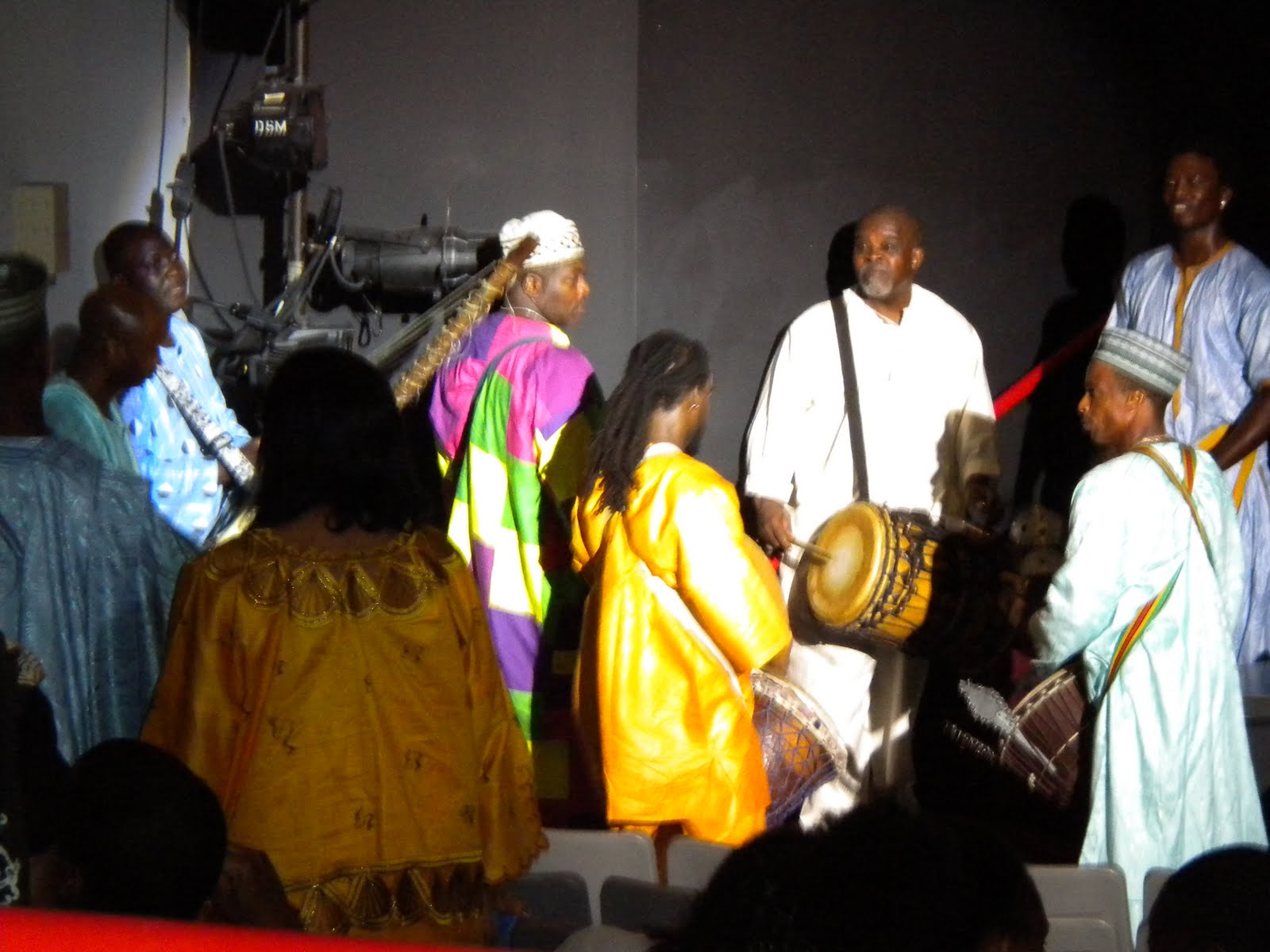
front to back - Rev. Jay Leach, Dr. Leon Spencer and unidentified participant 2007 Qiyamah's ordination at UU Church of Charlotte in Charlotte, NC


On September 28 I will be attending an interfaith training hosted by Lutheran School of Theology in Chicago titled, Training Religious Leaders for a Religiously Diverse World. I am eagerly anticipating this all day event and will report out on my blog about the event and my experiences. Meanwhile, I have a brief explanation on Interfaith Dialogue that I came found on DuPaul University's website titled, Four Ways of Interfaith Dialogue that I would like to share:

Dialogue of Life - In which people of different faiths and spiritual traditions strive to live in an open and neighborly spirit - includes socializing and hospitality

Dialogue of Action - In which people of spiritual commitment and faith collaborate with others in building a just society - includes service and working for justice

Dialogue of Religious Experience - In which people steeped in their spiritual traditions share their ways of searching for God or the Absolute - includes prayer, worship, and celebration

Dialogue of Theological Exchange - In which specialists seek to deepen their understanding of other spiritual heritages

Q. In what ways have you crossed borders to experience other faith traditions beyond your own? How can you deepen your understanding and appreciation for other spiritual heritages and collaborate to build a just society?

Blessed Be! Rev. Qiyamah

Thursday, September 16, 2010

Rosa Parks

Danielle L. McGuire, author of a newly released book on Rosa Parks, deceased civil rights activist, examines Parks life in light of newly discovered information. See below some excerpts from the book titled: At the Dark End of the Street: Black Women, Rape and Resistance

THE BOOK
Rosa Parks was often described as a sweet and reticent elderly woman whose tired feet caused her to defy segregation on Montgomery’s city buses, and whose supposedly solitary, spontaneous act sparked the 1955 bus boycott that gave birth to the civil rights movement.

The truth of who Rosa Parks was and what really lay beneath the 1955 boycott is far different from anything previously written.

In this groundbreaking and important book, Danielle McGuire writes about the rape in 1944 of a twenty-four-year-old mother and sharecropper, Recy Taylor, who strolled toward home after an evening of singing and praying at the Rock Hill Holiness Church in Abbeville, Alabama. Seven white men, armed with knives and shotguns, ordered the young woman into their green Chevrolet, raped her, and left her for dead. The president of the local NAACP branch office sent his best investigator and organizer to Abbeville. Her name was Rosa Parks. In taking on this case, Parks launched a movement that ultimately changed the world.

The author gives us the never-before-told history of how the civil rights movement began; how it was in part started in protest against the ritualistic rape of black women by white men who used economic intimidation, sexual violence, and terror to derail the freedom movement; and how those forces persisted unpunished throughout the Jim Crow era when white men assaulted black women to enforce rules of racial and economic hierarchy. Black women’s protests against sexual assault and interracial rape fueled civil rights campaigns throughout the South that began during World War II and went through to the Black Power movement. The Montgomery bus boycott was the baptism, not the birth, of that struggle.

At the Dark End of the Street describes the decades of degradation black women on the Montgomery city buses endured on their way to cook and clean for their white bosses. It reveals how Rosa Parks, by 1955 one of the most radical activists in Alabama, had had enough. “There had to be a stopping place,” she said, “and this seemed to be the place for me to stop being pushed around.” Parks refused to move from her seat on the bus, was arrested, and, with fierce activist Jo Ann Robinson, organized a one-day bus boycott.

The protest, intended to last twenty-four hours, became a yearlong struggle for dignity and justice. It broke the back of the Montgomery city bus lines and bankrupted the company.

We see how and why Rosa Parks, instead of becoming a leader of the movement she helped to start, was turned into a symbol of virtuous black womanhood, sainted and celebrated for her quiet dignity, prim demeanor, and middle-class propriety—her radicalism all but erased. And we see as well how thousands of black women whose courage and fortitude helped to transform America were reduced to the footnotes of history.

A controversial, moving, and courageous book; narrative history at its best.
------------------------
Publisher's Weekly (Starred Review)

McGuire's "new history" shines fresh light upon the germinal role of black women in the birth and development of the civil rights movement. "For decades," she writes, "the Montgomery bus boycott has been told as a story triggered by Rosa Parks's spontaneous refusal to give up her seat followed by the triumphant leadership of men." McGuire, assistant professor of history at Wayne State University, goes behind that story to tell of black women's struggles against abuse by white bus drivers and police officers that launched the boycott. She foregrounds black women's experiences of "verbal, physical, and sexual abuse" as prime movers of the grassroots movement. From the rape of Recy Taylor (1944) to the rape of Joan Little (1975), McGuire restores to memory the courageous black women who dared seek legal remedy, when black women and their families faced particular hazards for doing so. McGuire brings the reader through a dark time via a painful but somehow gratifying passage in this compelling, carefully documented work. (Sept.)

"At the Dark End of the Street is one of those rare studies that makes a well-known story seem startlingly new. Anyone who thinks he knows the history of the modern civil rights movement needs to read this this terrifying, illuminating book." – Kevin Boyle, National Book Award-winner for Arc of Justice: A Saga of Race, Civil Rights and Murder in the Jazz Age

"This gripping story changes the history books, giving us a revised Rosa Parks and a new civil rights story. You can't write a general U.S. history without altering crucial sentences because of McGuire's work. Masterfully narrated, At the Dark End of the Street presents a deep civil rights movement with women at the center, a narrative as poignant, painful and complicated as our own lives." –Timothy B. Tyson, National Book Award Finalist for Blood Done Sign My Name: A True Story

"Just when we thought there couldn't possibly be anything left to uncover about the civil rights movement, Danielle McGuire finds a new facet of that endlessly prismatic struggle at the core of our national identity. By reinterpreting black liberation through the lens of organized resistance to white male sexual aggression against African-American women, McGuire ingeniously upends the white race's ultimate rationale for its violent subjugation of blacks—imputed black male sexual aggression against white women. It is an original premise, and At the Dark End of the Street delivers on it with scholarly authority and narrative polish." –Diane McWhorter, Pulitzer Prize Winner for Carry Me Home: The Climactic Battle of the Civil Rights Revolution

"Following the lead of pioneers like Darlene Clark Hine, Danielle McGuire details the all too ignored tactic of rape of black women in the everyday practice of southern white supremacy. Just as important, she plots resistance against this outrage as an integral facet of the Civil Rights Movement of the 1950s and 1960s. This book is as essential as its history is infuriating."
--Nell Irvin Painter, author of The History of White People

"A young scholar unearths some hidden history about women in the civil rights movement—then finds it unexpectedly echoed in her own life." Download the complete PDF article.
--Bliss Broyard, ELLE Magazine
=====================================

Excerpt
Prologue – At the Dark End of the Street

On September 3, 1944, the Rock Hill Holiness Church, in Abbeville, Alabama, rocked late into the night. It was nearly midnight when the doors of the wooden, one-story church swung open releasing streams of worshippers, all African American, into the moonlight. After a night of singing and praying, Recy Taylor, Fannie Daniel and Daniel’s eighteen-year-old son, West, stepped out of the country chapel and strolled toward home alongside the peanut plantations that bounded the Abbeville-Headland highway. Taylor, a slender, copper-colored and beautiful twenty-four-year-old mother and sharecropper, noticed a rattletrap green Chevrolet pass them at least three times, young white men gawking from its windows.
“You reckon what they are up to?” Taylor asked.

Taylor and Daniel, a stout sixty-one year old woman, watched the car creep by one last time and roll to a stop a few feet ahead of them. Seven men, armed with knives and guns, got out of the car and walked toward the women.

Herbert Lovett, the oldest of the crew at twenty-four and a private in the United States Army, shouted, “Halt!”

When they ignored the order, Lovett leveled his shotgun. West tugged at his mother’s sleeve, begging her to stop. “They might shoot you,” he whispered.
As the circle of men closed in, Lovett waved his gun at Taylor.

“We’re looking for this girl, right there. She’s the one that cut that white boy in Clopton this evening,” Lovett said, adding that local Sheriff George H. Gamble had dispatched the group to find the alleged assailant.

“You’re wrong,” Fannie insisted, “she’s been to my house all day.”

The men crowded closer, nodding their heads in agreement. “Ain’t this her?” Lovett asked.

“Yep, this the one,” Joe Culpepper said, “I know her by the clothes she got on.”
“That’s her,” Luther Lee agreed. “Get her!”

Lovett lurched toward Taylor and grabbed her arm. Then he turned to West and asked if Taylor was his wife.

“No,” West replied, “she’s Willie Guy Taylor’s wife.” Undeterred, Lovett extended his hand to the teenager, ordered him to shake it, and promised not to hurt Taylor.

“We’re going to take her up here and see if Mr. Gamble knows her,” Lovett claimed. “If she’s not the one, we’ll bring her right back.”

As Lovett spoke, Taylor managed to wrest her arm from his grasp and bolted toward a stand of trees behind a cabin.1

“Come back! Come back!” Fannie yelled. “They going to shoot you. Come back!”2

“Stop,” Lovett shouted. He cocked the gun at the back of her head. “I’ll kill you if you run.”

Lovett walked Taylor to the car and shoved her into the back seat. Three men piled in behind her, while four others squeezed into the front. The headlights switched off and the car crept away. After a few miles, the green sedan turned off the main highway, rattled down a red-clay tractor path into the woods and stopped in a grove of pecan trees. “Y’all aren’t carrying me to Mr. Gamble,” Taylor shouted.

The men in the back seat clasped her wrists and ordered her to be quiet. Lovett grabbed his gun and waved Taylor and his companions out of the car.

“Get them rags off,” he barked, pointing the shotgun at her, “or I’ll kill you and leave you down here in the woods.”

Sobbing, Taylor pulled off her clothes.

“Please,” she cried, “let me go home to my husband and my baby.”

Lovett spread an old hunting coat on the ground, told his friends to strip down to their socks and undershirts, and ordered Taylor to lie down. Lovett passed his rifle to a friend and took off his pants. Hovering over the young mother, he snarled, “Act just like you do with your husband or I’ll cut your damn throat.”

Lovett was the first of six men to rape Taylor that night. When they finished, someone helped her get dressed, tied a handkerchief over her eyes, and shoved her back into the car. Back on the highway, the men stopped and ordered Taylor out of the car. “Don’t move until we get away from here,” one of them yelled. Taylor heard the car disappear into the night. She pulled off the blindfold, got her bearings, and began the long walk home.3

A few days later, a telephone rang at the NAACP branch office in Montgomery, Alabama. E. D. Nixon, the local president, promised to send his best investigator to Abbeville. That investigator would launch a movement that would ultimately change the world.
Her name was Rosa Parks.4

In later years, historians would paint Parks as a sweet and reticent old woman, whose tired feet caused her to defy Jim Crow on Montgomery’s city buses. Her solitary and spontaneous act, the story goes, sparked the 1955 bus boycott and gave birth to the civil rights movement. But Rosa Parks was a militant race woman, a sharp detective, and an anti-rape activist long before she became the patron saint of the bus boycott. After meeting with Recy Taylor, Rosa Parks helped form the Committee for Equal Justice. With support from local people, she helped organize what the Chicago Defender called the “strongest campaign for equal justice to be seen in a decade.” Eleven years later, this group of homegrown leaders would become better known as the Montgomery Improvement Association. The 1955 Montgomery bus boycott, often heralded as the opening scene of the civil rights movement, was in many ways, the last act of a decades-long struggle to protect black women, like Taylor, from sexualized violence and rape.

The kidnapping and rape of Recy Taylor was not unusual in the segregated South.

The sexual exploitation of black women by white men had its roots in slavery, but continued, often unpunished, through the better part of the twentieth century. As Reconstruction collapsed and Jim Crow arose, white men abducted and assaulted black women with alarming regularity. White men lured black women and girls away from home with promises of steady work and better wages; attacked them on the job; abducted them at gun-point while traveling to or from home, work or church; raped them as a form of retribution or to enforce rules of racial and economic hierarchy; sexually humiliated and assaulted them on streetcars and buses, in taxi cabs and trains, and other public spaces.

Black women did not keep their stories secret.

African American women reclaimed their bodies and their humanity by testifying about their assaults… Their testimonies spilled out in letters to the Justice Department and appeared on the front pages of the nation’s leading black newspapers. Black women regularly denounced their sexual misuse. By deploying their voices as weapons in the wars against white supremacy, whether in the church, the courtroom, or in congressional hearings, African American women loudly resisted what Martin Luther King Jr., called the “thingification” of their humanity. Decades before radical feminists in the Women’s Movement urged rape survivors to “speak out,” African American women’s public protests galvanized local, national and even international outrage and sparked larger campaigns for racial justice and human dignity. When Recy Taylor spoke out against her assailants and Rosa Parks and her allies in Montgomery mobilized in defense of her womanhood in 1944, they joined this tradition of testimony and protest.

Montgomery, Alabama was not the only place in which attacks on black women fueled protests against white supremacy. Between 1940 and 1975, sexual violence and interracial rape became one crucial battleground upon which African Americans sought to destroy white supremacy and gain personal and political autonomy. Civil rights campaigns in Little Rock, Arkansas; Macon, Georgia, Tallahassee, Florida; Washington, North Carolina; Birmingham and Selma Alabama; Hattiesburg, Mississippi, and many other places—had roots in organized resistance to sexual violence and appeals for protection of black womanhood.

Like the kidnapping and rape of Recy Taylor in Abbeville, Alabama in 1944, these brutal attacks almost always began at the dark end of the street. But African Americans would never let them stay there.
________________________________________
NOTES TO PROLOGUE EXCERPT
• 1 “Report” and “Supplemental Report,” submitted by N.W. Kimbrough and J.V. Kitchens, December 14 and 27, 1944, folder 1, CS. See also Earl Conrad, Eugene Gordon, and Henrietta Buckmaster, “Equal Justice Under Law,” pamphlet prepared by the Committee for Equal Justice for Mrs. Recy Taylor, n.d., in folder 3, ibid. The Rockhill Holiness church is still there, but is now called the Church of God in Christ. Thanks to Robert Corbitt and Josephine Baker for a tour of the church.
• 2 I-Corbitt 3. I-Corbitt &RTC. Corbitt, Recy’s youngest brother who was a witness to the events that followed the attack, corroborated nearly every detail in the Governor’s report.
• 3 “Report”, 7. According to reports, seven men were in the car, but only six participated in the gang rape. Billy Howerton claims he did not have sex with her. The other assailants corroborated Howerton’s testimony. See “Report,” 9-10.
• 4 I-RCT, I-Corbitt 8.

Tuesday, August 24, 2010

Faith, Fear and Family


My oldest sister Betty Jean Holmes - Woman of God

Introduction
In this posting I want to talk about faith, fear and family. I have traveled from home in Chicago, IL to Atlanta, GA where I have been for almost two weeks. My original intention was to visit my sister, Betty, who is in the hospital and then head to the Grand Canyon with relatives for a much needed weeks vacation. When I arrived I realized that Betty's condition was worse than I realized. A surgery which she led us to believe was out patient now had resulted in almost two weeks in ICU. My younger daughter, Kaleema, had arranged to come down in preparation for the surgery and spend time with her aunt to help her out. This was despite Betty's protests that she would not need help.

Kaleema has now been in Atlanta for almost a month. I opted to revise my plans as I began to weigh the circumstances in consultation with my older daughter, Libra who also lives in the area. During this same time I was informed that a very close niece of my mother's (Hazel) was terminal and she had been given 2-4 months to live. The day after I was informed of her condition she was dead. That was a Wednesday. She was buried on Saturday.

This post is about faith, fear and family. When I was first informed of my sister's surgery, while not routine it was not serious. As her circumstances became more and more dire, due to complications, I began to grow afraid. I remember a particularly fearful moment that I began to pray for the strength and faith necessary to overcome the relentless fear that threatened to overcome me. I recalled when she went into surgery several years ago and she was in prayer with the medical team. She was such a strong woman of faith. She was my shero and example of a woman of God. When we needed or desired something particular we would call her and have her pray with and for us. She was the epitome of faith and belief in God. In my moment of crisis and remembering I realized that she was not able to pray for herself and that the least I could do was to stand in faith and hold at bay all the uncertainty as she lay on her sick bed unable to pray and call on the Most High. Too much was at stake! And I refused to allow my frailties to dictate for me my faith and to interfere with my ability to harness the powers of good in the universe. I began to call on and invite all that was good in the universe. You see, I believe that we have the power to manipulate and move energy and to heal. And in that moment I did not have room for disbelief! Too much was at stake! I could not have lived with myself if I did not call on all that I had within me to beckon the healing powers in the universe - if I did not at least do my part. I also began to minister to my daughter Kaleema when she called and she needed assurance.

Seven of my siblings and family drove down from Detroit for Hazel's funeral. On the way back they stopped by to visit Betty. The nursing staff allowed her to go outside for the first time since she had arrived at the hospital. We all stood around her bed in the gorgeous Georgia sun and under the blue sky and prayed over and with Betty. I know without a doubt at that moment that our prayers were received and a healing took place. There were too many prayer warriors standing and directing healing forces. Of course the medicine and the medical team helped. We are all team players in the great game of life. Why are some prayers answered and others are not? I do not know the answer. I only know that there are times when we invite the presence of the sacred and divine (ours and others) and we direct it toward certain ends and those ends manifest as we desire. Perhaps the outcome is already decreed. I do not necessarily believe that but I do not know for certainty. I just know that a theology that allows me to have some agency as co-creator is life affirming and meets my criteria for what is sustainable.

As we stood around my sister I realized that there were as many theologies and ideologies represented as there were individuals. I realized in that moment it did not really matter what we believed but that we believed and gifted her with the power of our presence, our love and our beliefs. Our loving energies represented a healing balm as great as the doctor's medicines. We invoked the presence of good/god/ancestors and gifted her in that moment something that neither science or humans have been fully able to discern and articulate; prove or disprove.

Death and near death experiences have a way of stripping away everything but what is most real to us. I know family is real. If you come from a large family like mine you probably have dysfunctional and functional aspects present in your family. No doubt you have some pettiness and bickering. And you have moments like we experienced when everyone came together. The family members that live in Atlanta have been visiting Betty. We have pulled together despite our differences; despite personality conflicts and differences of opinion. Adversity has a way of bringing out the best and worst and setting aside the rest. Our vision becomes crystal clear about what is and is not important. My moment of crisis when I was afraid that I could not find the power and presence within me to call forth the blessing and healing that Betty needed; the moments when Kaleema and I were bickering over small and insignificant things; the moments when I wanted to strangle the faculty back home. I realize that when I do not constantly claim and know my truth then I act out my sense of despair. My initial paralysis was brought on by the unconscious realization that my journey as a minister had not here-to-fore required me to really stand in my power and know my truth - to stand on it as if my life depended on it. To stand on it and know that I know that I know! I was scared! What if I am not up to it! What if I am just playing! What if! What if! My bickering with my daughter is my fear - fear that I do not see or cannot hold faith that her good is manifesting and that the next step in her journey is being worked out even though I cannot see it. I have to also know when to let go and let God and all the powers in the universe take over and take control.

Fear is a powerful emotion. It does not serve us except in a very primitive manner. It alerts us to danger. But we cannot let fear dictate our actions. We have to hold fear back and say like Jesus, "Get thee behind me."

The entire ordeal has given me insights into myself and the need to continue my spiritual practices of prayer and meditation. In those spiritual practices I want to focus energy toward letting go of my fears. I realize how much they hold me back and how much I am a prisoner to my fears. I cannot even imagine my life without fear and what I might be doing if I did not allow my fears to hold sway over me.

But the fear and the faith are intimately entangled. If I have faith then I could release the fear. If I could release the fear I could have faith. whew! I am knowing and claiming for myself a release from these fears: fear of failure; success; happiness; intimacy; and loving relationships. These are just a few that I have let rule my life. Fear of being out of control; of loosing control!

Finally, I have grown to really appreciate family and family connections. I say that I understand the bonds of family. But it has taken Betty's illness and Hazel's death to really appreciate it. Sitting in the little church in South Georgia swatting the pesky little gnats in the midst of all the family and friends gathered to see Hazel off was a testimony of her legacy. And while we do not want to wait until death I did think I want my friends and loved ones to gather and say good bye to me, to tell stories that represent our connections and the legacy that I lived.

All of us want that to some degree or another. Not the send off! One of my sisters does not want any kind of ceremony at all. She wants all of her stories and flowers shared in life and not death. No, what I am talking about is that we all want a legacy. We want to know that our life mattered and that we did something that registered that we existed and that somehow no matter how small that we made a difference.

Question: What difference are you making with your life? What fears prevent you from living fully and making that difference? What family members have you failed to reach out to and to tell them that you love them? What will you be remembered for in your death?

Blessings! Rev. Qiyamah

Thursday, August 12, 2010

Revisiting the Shirley Sherrod Incident

First Tiger Woods and now Shirley Sherrod. What is the deal you might ask! A day short and a dollar late. Yes, I realize that I am addressing the issue of Shirley Sherrod well after the fact. Yet, these issues are so complex that I am finding I must seek out reasoned voices and analyses and that is not always my own.lol So from time to time I will bring what I think are some helpful viewpoints on complex issues.

The ‘Christianization’ of Shirley Sherrod
Christianization by Any Other Name (or Color) Smells the Same
By Rosetta E. Ross
Write a letterEmailPrintShare
Andrew Breitbart, American.


Rosetta Ross is Dean of Academic Affairs at Howard University. She is author of Witnessing and Testifying: Black Women, Religion, and Civil Rights (Fortress Press, 2003).

Blogger Andrew Breitbart’s recent attack on Shirley Sherrod reflects the American legacy of “Christianization”—the measure of black acceptability in white civil society. Sherrod (a former Student Non-Violent Coordinating Committee activist, and longterm farm advocate) lost her job as the USDA Director of Rural Development in Georgia after Breitbart manufactured an image of her that was out of compliance with his standard of appropriate black behavior toward white persons. The reality of Breitbart’s deception has been made painstakingly clear through full presentation of the context from which the excerpted sound bite was clipped.

The sound bite came from Sherrod’s March speech during which she encouraged a black audience toward sensible racial collaboration to help “poor” people and not just “black” people. Sherrod told the story of helping a working class white farmer save his farm. Memories of her father’s still-unsolved racial murder and legacies of racial injustice against African Americans, she said, initially made her hesitant to put full efforts behind white farmers Roger and Eloise Spooner when they approached her for help.

However, when the white attorney to whom Sherrod referred the Spooners failed to take their predicament seriously, she realized the challenges they faced were the same as those faced by the black farmers she helped everyday. “[W]orking with him,” Sherrod said, “made me see that it’s really about those who have versus those who don’t, you know, and they could be black, they could be white, they could be Hispanic.”

While Sherrod told the story to demonstrate and encourage transformation (a transformation she identified as divinely inspired), Breitbart intentionally sought to discredit her by posting an edited clip showing only Sherrod’s discussion of her initial hesitancy. Breitbart’s construction of a mechanism to “get” Sherrod and her black audience is not significantly different from the narrow and arbitrary policies drawn to confine African Americans in the 19th and 20th centuries (e.g., convoluted literacy tests, grandfather clauses, and behavioral policies required for black enfranchisement and interaction with whites). Such practices are rooted in colonial uses of Christianity to circumscribe black life.

Colonial use of Christianity—or “Christianization”—is the employment of “Christian” rhetoric and identification to construct meaning in social and political life. This has included establishing specific conceptions of citizenship, structures of education, social roles and behaviors that simultaneously develop and inscribe hetero-patriarchy, white supremacy, and racial subjugation in policies, practices, and the imagination.

Examining Christianization during the US antebellum era, religious historian Albert Raboteau says Christianity initially had a slow start among enslaved Africans in the United States because, among other reasons, enslavers feared a common baptism would signal social equality. To resolve the dilemma Christian missionaries declared that Christianity would help better fit black persons to enslavement.

Crafting a “Christian” argument that enabled the participation of enslaved Africans continued even after Emancipation as some black racial uplift workers, and white evangelical home missionaries, argued that Christianizing formerly enslaved persons was necessary in order to make them acceptable and respectable participants in civil society. Christianity (rather, Christianization) functioned in both instances as a mechanism to define or justify black humanity and participation within white civil society.

To add injury to Breitbart’s insult, the NAACP and Obama Administration hastily misjudged Sherrod, condemning and firing her, respectively. Notwithstanding recent apologies and retractions, more disappointing than the administration and NAACP’s failure to investigate Breitbart’s claims is their rush to show they are not guilty of supporting so-called “black racism” (i.e., that they do not condone black “misbehavior”). Similar to some racial uplift advocates of the Reconstruction era the Obama administration and NAACP officers apparently seek to broker acceptable black participation in civil society. Also similar to that era is the cross-racial patriarchal collaboration against a black woman.

The current cultural offensive launched through poisonous sound bites and blogs includes a subtext advocating a constricted, “Christianized” social morality that excludes racial, sexual, class, language, and even certain gender diversity. In the face of so much knee-jerk speaking and thinking, the time is ripe for critically thoughtful governing officials, civic leaders, compassionate conservatives and liberation theologians to celebrate and follow Sherrod’s longterm lead of overcoming direct racial injury and speaking the truth while encouraging thoughtful collaboration to build a diverse society for everyone

Friday, August 6, 2010

Phoenix Heats Up

Below is information covering the immigration issues that have become the focus of the nations attention since Phoenix, Arizona passed legislation Senate Bill 1070 that encourages racial profiling. Unitarian Universalists along with a number of other faith communities have gotten involved. This article is taken from the website of the Unitarian Universalist Association (UUA):

Twenty-nine Unitarian Universalists, including eight ministers, were arrested in Phoenix, Ariz., for acts of civil disobedience protesting Arizona's strict anti-illegal immigration law.


Among those arrested were Unitarian Universalist Association President Peter Morales and the Rev. Susan Frederick-Gray, minister of the UU Congregation of Phoenix. They were among 150 UUs, many from out of state, who came to Phoenix for actions in support of immigrant families on Thursday, July 29, the day Senate Bill 1070 went into effect. Opponents of SB1070 say it encourages racial profiling by police, although a federal judge issued an injunction July 28 that blocked several controversial provisions of the law.

UUs were among hundreds of people who swarmed into downtown streets, blocking traffic at midday in the vicinity of the Fourth Avenue Jail and the offices of Maricopa County Sheriff Joe Arpaio. Arpaio, who calls himself “America’s toughest sheriff,” is a strong supporter of anti-immigrant legislation, launching workplace raids and authorizing the arrest and deportation of thousands of undocumented people.

Morales and Frederick-Gray were arrested as they blockaded the prisoner intake entrance at the jail with three other UUs and members of Puente, a Hispanic human rights group. One of those arrested at the jail entrance was Salvadore Reza, a Puente leader who came to the UUA General Assembly in Minneapolis in June to invite UUs to Phoenix to act in concert against SB1070. Most of the other UUs were arrested as they blocked a city street outside the sheriff’s office several blocks away. Across the downtown area similar blockades were undertaken by other groups.

UUs were acting in support of local immigrant groups, including Puente, an affiliate of the National Day Laborer Organizing Network.* In all, more than 80 people were arrested Thursday.

The demonstrations went forward as planned, even though a federal judge blocked key parts of the law from going into effect, because a higher court could reverse that decision. As written, SB1070 would have authorized local police to check the immigration status of people already stopped or detained if a “reasonable suspicion” existed that they were undocumented; the law also would have made it a crime for undocumented workers to solicit or perform work. Under the new ruling, both provisions have been removed, although much of the law remains, including a part making it a misdemeanor to harbor or transport undocumented people.

Phoenix police and sheriff’s deputies allowed the blockades to go on for one to two hours before arresting those who refused to move. Arrests began around noon on Thursday; prisoners were released overnight or Friday morning. Court appearances were set for some in mid-August. Most were charged with obstructing a public roadway and with failure to obey police, both misdemeanors.

Events started early on Thursday. Some UUs were at the State Capitol in Phoenix at 4:30 a.m. to march about a mile to Trinity Episcopal Cathedral for an interfaith worship service.* UUs marched in support of a group of mostly Hispanic and Latino/a people who have held a daily vigil at the Capitol since SB1070 was approved in April. The vigil ended Thursday morning out of fear that some participants, who are undocumented, might be arrested.

The nearly two-hour service at the cathedral included Roman Catholic, Baptist, Presbyterian, Methodist, Episcopal, Muslim, Jewish, Unitarian Universalist, and nondenominational faith group representatives. A rainbow lit up the sky just before the service began, following a rainstorm that passed through overnight. A mariachi band participated in the service, as did a combined choir that included many UUs. During the service immigrant family members told stories of being separated from loved ones.

During the service, Frederick-Gray noted that her congregation includes families separated by deportations as well as the family of a police officer who was killed. She received strong applause when she said, “We must not be intimidated, and we must not be silent about where we stand. We must be clear that we stand on the side of love, that we stand on the side of family unity, that we stand for justice. We will not let more families be torn apart.”

From the cathedral, UUs and others marched downtown, gathering in César Chávez Plaza amid a complex of city and county government buildings, before beginning the blockade.

There were echoes of the 1960s civil rights movement in Phoenix. Tempie Taudte, from the UU Church of Tampa, Fla., says she was too busy graduating from college in the sixties to do anything. But at General Assembly this year she made a decision to come to Phoenix. “Now I have time, and I want to give back, in part because I didn’t do anything then.” On Wednesday she decided to risk arrest the following day. “It breaks my heart to know that families are being disrupted and parents taken away,” she said. “I want the rest of the country to hear us. I’m also concerned that other states, including mine, will try to adopt something like this.”

Taudte was indeed arrested Thursday when she sat down in the street and refused to move. After her release Friday afternoon she called her experience “life changing.” She said she plans to go back to Florida and challenge her congregation to get even more active than it has been on immigration issues.

The Rev. Wendy von Zirpolo, minister of the UU Church of Marblehead, Mass., and president of UU Allies for Racial Equity, was arrested at the county jail with Morales and Frederick-Gray. The experience was “physically frightening,” she said. “The experience validated much of what I understand about white privilege and racism.” She said that while she experienced some roughness during the arrest and the jail experience was harsh, fellow inmates of color were treated far worse.

Held overnight in a cell with as many as 30 other women, von Zirpolo said the group bonded, even those people who had been arrested for other issues. “It was an unintended consequence of their strategy to disrupt our sleep by moving us around. Each time, we would share names and origins. We sang together, held those who needed to cry, demanded medical attention for our sisters in need, and most importantly, listened to each others stories. We made community.”

The Rev. Gregory Scott Ward, minister of the UU Church of the Monterey Peninsula in Carmel, Calif., said being in jail changed him. “I no longer think I’m different from other people. I was surprised by how quickly one’s humanity can be diminished when wearing prison stripes and the pink socks and pink underwear they make you wear. And how that humanity is restored when you find out that people are waiting for you when you come out.”

UUs who had not been arrested held a late evening candlelight vigil outside the jail Thursday night, bringing a guitar and flute and singing songs in Spanish and English. A few people remained all night, to be there when fellow UUs were released from jail.

Unitarian Universalists were the most visible religious group in Phoenix. Many wore the yellow T-shirts of the UUA’s Standing on the Side of Love campaign. UUA Moderator Gini Courter said, “On the street we were clearly identifiable as religious people. We lived our faith in a very public way. People were coming up to us and thanking us for being there.”

As a consequence, Morales was in constant demand for interviews. Dea Brayden, special assistant to the president, said Morales was interviewed 15 times by local, national, and international media. After he was released from jail, Morales participated in yet another press conference. When asked by a reporter if blocking streets is the best way to address human rights issues, he said, “We want to interfere with the incredible intimidation that is going on here. We as people of faith are called upon to take action to stop that. This is what happened in Selma. This is in the greatest tradition of America. While we are law-abiding citizens there are times when the laws are so immoral they need to be changed. That’s what responsible citizens do.”

Courter said this week’s efforts build on the long-term work of UU congregations in Arizona, as well as local human rights groups like Puente and the National Day Laborer Networking Organization, in confronting racism and immigration injustices. She said, “I have seen us take our calling very seriously here. Our ministers and lay people have taken some real risks. Our work here is a substantial move toward living our UU values in a democracy. And there is so much more for us to know and learn.”

“What we need to do now is build capacity to do this work,” Courter said. “We need congregations to take seriously the fact that their delegates at General Assembly this year chose immigration reform as the next Study/Action Issue. We need congregations offering Spanish and learning hymns of other cultures and building partnerships with groups in their communities. There is such a critical role for Unitarian Universalism in this human rights struggle.”

The Rev. Kenneth Brown, district executive for the UUA’s Pacific Southwest District, which includes Arizona, said, “I have been doing this work for 45 years, and this was one of the most meaningful events I’ve been involved with. What we hope happens now is that the people who came here take this issue home and work on it there. This is the civil rights issue of our era.”

The main action happened Thursday, but that wasn’t the end of things. On Friday, members of Puente, the Ruckus Society, the Catalyst Project, the National Day Laborer Organizing Network, and Let's Build a U.S. for All of Us, were arrested when they tried to prevent sheriff’s deputies from conducting an immigration sweep.* Salvador Reza was arrested again while watching events from across the street. For the second night in a row, Unitarian Universalists held a vigil outside the jail until Reza and others were released.

The UU Congregation of Phoenix and the Valley UU Church in Chandler, Ariz., served as headquarters for last week’s events. Events were also held across the country, in Los Angeles, Chicago, New York, and Philadelphia, in support of the protests against SB1070.

Delegates to the UUA's 2010 General Assembly voted to hold a “justice General Assembly” focused on immigration and human rights in Phoenix in 2012; they also passed a resolution condemning SB 1070 and similar legislation in other states.

Dan Furmansky, campaign director of Standing on the Side of Love, the UUA’s campaign against identity-based oppression, said that UUs made a real difference in Phoenix this week. “Media outlets across the world have images of SB1070 protests with our message of bright yellow ‘Love’ emblazoned everywhere. Our partners striving for immigrant justice know that their struggle is our struggle, and that we stand on the side of love with them for the long haul. Sheriff Joe Arpaio has met a new form of resistance that brought greater scrutiny to his actions. And those who were arrested showed that there are people of faith who feel morally compelled to put their bodies and their freedom on the line when injustice pronounces itself with an exclamation point and demands a response.”

The Rev. David Miller, minister of the UU Fellowship of San Dieguito in Solana Beach, Calif., wrote in an e-mail after last week’s events that he believed events in Phoenix marked a turning point for Unitarian Universalism. “It was phenomenal to be part of a well-coordinated effort of civil disobedience with Unitarian Universalists from every corner of this country.”

He added, “I was personally thanked many times for being there—the desk clerk and maintenance person at the hotel, someone on the mayor’s staff who I met at Starbucks, people in the street. Finally, as I stood on the street corner watching those who had volunteered to get arrested stake their claim to the street, I heard a young African-American girl turn to her mother and say, ‘What are they doing?’ Her mother replied, 'Do you remember what I told you about Dr. Martin Luther King? That is what they are doing.' I broke into tears.

“Growing up just after the Vietnam era . . . I have never truly felt a part of a great struggle for human rights that has moved my soul. Now, with the struggle for marriage equality and for basic human rights in Arizona, I feel so honored and called to do whatever I can. The desire to do this work is one of the primary reasons I felt called to the ministry. I am filled with deep gratitude for being a part of this act of love, and I have so much hope for our future.”


--------------------------------------------------------------------------------

Corrected 8.4.10:As originally published, we did not indicate that Puente was an affiliate of the National Day Laborer Organizing Network (click here to return to the corrected paragraph), mistakenly said that "many" UUs were at the State Capitol (click here to return to the corrected paragraph), and did not include the names of additional organizations who had members arrested on Friday (click here to return to the corrected paragraph).

Contact us | Privacy policy
UU World Magazine | 25 Beacon Street, Boston MA 02108 | (617) 948-6502
© 1996-2010 Unitarian Universalist Association of Congregations. All rights reserved.
Thursday, August 5, 2010

How to Plant Your Garden


Some of the "flowers" from General Assembly 2010 that presented on diversity issues.


Instructions for planting your diversity garden.
First, you Come to the garden alone,
while the dew is still on the roses...

FOR THE GARDEN OF YOUR DAILY LIVING,
PLANT THREE ROWS OF PEAS:


1. Peace of mind
2. Peace of heart
3. Peace of soul


PLANT FOUR ROWS OF SQUASH:

1. Squash gossip
2. Squash indifference
3. Squash grumbling
4. Squash selfishness


PLANT FOUR ROWS OF LETTUCE:

1. Lettuce be faithful
2. Lettuce be kind
3. Lettuce be patient
4. Lettuce really love one another


NO GARDEN IS WITHOUT TURNIPS:


1.. Turnip for meetings
2. Turnip for service
3. Turnip to help one another

TO CONCLUDE OUR GARDEN WE MUST HAVE THYME:


1. Thyme for each other
2.. Thyme for family
3. Thyme for friends


WATER FREELY WITH PATIENCE AND CULTIVATE WITH LOVE. THERE IS MUCH FRUIT IN YOUR GARDEN BECAUSE YOU REAP WHAT YOU SOW.

Q. What are you planting in your garden of life? Have a blessed day!
Blessings! Rev. Qiyamah

source: Thanks to Mary el for sending me this beautiful information

Sunday, August 1, 2010

Odds N Ends


Sista Chrystal Marshall may be the only individual with a Ginko tree in her front yard. If you want to know how she got the city to plant it then email me and I will pass your email on to her.


More of Chrystal's enormous hibiscus blooms. Notice the leaves are slightly different from the most common hibiscus plants one usually sees.


Did I say that the hibiscus is one of my favorite flowers?


We discovered this hibiscus plant in a yard at S. Woodlawn and 64th st.


President Abdoulaye Wade of Senegal while on tour in the United States recently attended a reception in his honor at the DuSable Museum. The evening featured a brief presentation from the President and a popular Senagalese musician along with the local Muntu Dance Theatre. Muntu was so great that the President invited them to be his personal guests at a black arts festival to be held later in the year.

9 Marks of a Champion

I recently found this list in a congregational newsletter that I want to share with you:

1. Believes and visualizes themselves winning
2. Believes and is willing to go through change
3. Believes they are loved by the Most High/God/the Holy
4. Willing to forgive and be forgiven
5. Believes they can rule their thought life (that is, they know that their thoughts are energy that they can and should be in charge of and can manipulate to produce certain outcomes )
6. Believes that they can make a difference and be agents of change
7. Believes that they can accomplish great things and greater works; on the way to the next level
8. Demonstrates that they are a finisher (and can take care of business)
9. Stands in the midst of adversity

I wish to add a 10th characteristic: Knows how to ask for and invite support from others because they understand no one is an island. and that in order to achieve great things we must come together.

Q. How many of these Marks of a Champion/Winner/Self Actualized individual apply to you?

Sacred Text of the Day - James 1:22
Do not be just hearers of the word but doers of the word.

Q. Where in your life are you sitting on the sidelines expecting someone else to do something? How can you more fully take charge of your life and lead the kind of life that you dream about? Begin today! Don't put it off another day!


Radical Disciple

August 4 and August 8 the documentary, Radical Disciple debuted and featured Father Pfleger. It captured his activism, passion and charisma while "exploring issues of racism, theology, and the role of the media." There is still time to view the August 8 airing on PBS, WTTW, Channel 11.

I am so impressed with the ministry of St. Sabina where Father Michael Pfleger resides as pastor that I included the Church in our community tour for 15 students that will begin their part time integrated internships through Meadville Lombard Theological School this fall.

Blessings! Rev. Qiyamah

Tuesday, July 27, 2010

If Love is the Answer, then what is the Question?

Art as Spiritual and Political Tools
I have gathered a few pictures to demonstrate these simple words, that is, art (images) can be a powerful source of spiritual and political teachings for both the conscious and unconscious quest for love. I started off writing about something else and Spirit had other things in mind! This post is about love!
Blessing! Rev. Qiyamah


Indigenous Art (from website) In the context of my theme (agape love)this art reminds me that in the midst of lifes struggles, ugliness, celebrations and beauty love can be found if we look for it and expect to find it. Too many of us give up and cease to look for it (including yours truly). In the words of my Holiness and Pentocostal brothers and sisters, I repent and rebuke that which would dispossess me of love. In the affirmations and words of Religious Science and Science of Mind, I am more than good enough to experience all my love and all my good. And so it is!


Rev. Carlton and Makala (daughter of Rev. Joseph Santos-Lyons and Ami Santos-Lyons)
I have titled this picture Extended Family Love


Contemporary Love - In the end, love is all there is! Looks fade, money can be lost or stolen, our material belongings can be destroyed but in the end love endures!


Earth Mother (from unknown website)I chose this beautiful graphic because of its universal symbolism of the mother who is depicted here as both alluring (beautiful and appealing) and fierce and deadly if crossed. She holds a child in her embrace that is mostly hidden (part of her protective qualities). Her presence draws attention away from her child so as not to subject it to dangers (seen and unseen). Notice that she has claws with feet pictured below. I believe these are for protection. She is both part human and part animal. The animal is savage and deadly when activated. You do not want to tamper with the animal in Earth Mother. Upon closer observation this same warrior element is depicted in Earth Mother's dress. It reminds me of the Bible verse, ...put on the full armor of god. While colorful with beautiful textures and designs if you look closer it resembles a protective piece of clothing that can serve many purposes. Finally, the sky is filled with shells, a sign of water and the sea. Water cleanses and is a source of food and pleasure. It is one of our greatest resources. Earth Mother is both saddened and angry about the "oil spill" in the gulf. Let it be a warning! Let us not forget that we are stewards of the earth and that we have important work (internally and externally) that we are called to do while here on earth.

Interfaith Conversations and Love
As many of us pursue interfaith ministries there are some general principles that provide common ground for our interactions and actions. These common foci in the world's religions include: 1. goal of alleviating human suffering; 2. avoiding harm to others; 3. striving toward empathy, that is, learning to identify with the needs of others, especially those most vulnerable and 4. primacy of agape love, that is, a love that exceeds all things. Agape love seeks the well being of others. All the world's great religions both teach and assume the priority of love in religious practice. Agape love means feeling and expressing pure, unlimited love for every human being with no exception. Platonic love (shared between friends) and eros or romantic love, shared by partners and lovers pales in comparison to agape love. Agape love is not directed toward a single person or small group but toward all humanity. Agape love cannot be captured within the limitations of language but must be displayed in some of the following ways: good will, kindness, forgiveness in the face of great injury, compassion and sacrifice.

Some scholars contend that the great poet Rumi was intoxicated with the love of god. Others believe he was in love with a human being. Readingne of his poems certainly conveys the depth of his love. But who was the object of his love? We cannot say for certain but we do know that his skill rendering of words allow us even today to feel his deep emotions that existed:

O love, o pure deep love
be here, be now.
Be all: worlds dissolve
into your stainless endless
radiance,
Frail living leaves burn with you
brigher than cold stars;
Make me your servant,
Your breath, your core.
Rumi/Persian sufi Poet

Buddhism - The definition of love in Buddhism is: wanting others to be happy. This llove is unconditional and it requires a lot of courage and acceptance (including self acceptance). Love in Buddhism refers to something quite different from the ordinary term of love which is usually about attachment, more or less successful relationships and sex, all of which are rearely without self interest. Instead, in Buddhism love refers to de-tachment and the unselfish interest in others welfare.

Native American - Manitongquat, a Native American poet, contends that,life is the Sacred Mystery singing to itself, dancing to its drum, telling tales, improvising, playing and that we are all that Spirit. Our stories will but one cosmic story that we are love indeed, that perfect love in me seeks the love in you, and if our eyes could ever meet without fear we would recognize each otehr and rejoice, for love is life believing in itself.


Christianity
- The Prophet Micah in 6:8 says, "What does the Lord require of you but to do justice, to love kindness and to walk humbly with your God."

1 Corinthians 13:13 But now abideth faith, hope, love, these three; and the greatest of these is love.

Islam - Surely (as for) those who believe and do good deeds for them will Allah bring about love Quran - Marium 96

Closing - This post has provided my morning reading, research and recitation. I thank you for that. In closing I share with you the words of a pastor, a Catholic priest, Rev. Dr. Michael L. Pfleger from St. Sabina. I had the opportunity to visit this Sunday, July 25. If you have not experienced the range of Catholic worship then you want to get yourself to St. Sabina. You would think that you were at a Baptist revival or UCC Trinity. This formerly all white church and neighborhood has transitioned to all black (or nearly). They have brought the cultural worship elements of the traditional black church and melded it with the Catholic culture and tradition. Worship was three hours plus and included: praise time prior to actual service, announcements (traditional in any church), bible readings 1st reading: Genesis 18:20-32 and 2nd reading: Colossians 2:12-14 and Luke 11:1-13. Their choir, small but powerful includes an array of musicians that can truly get down! That combined with some gifted vocalists brought the spirit into the place. Things get loud - loud music, loud exhortations, loud preaching. If you don't like loud this is not the church for you. At different times Father Pflager and the pianists lifted up the immortal words of Kirk Franklin exclaiming, "Make some noise up in here." And they/we did!

What I wanted to leave you with are Father Pflager's words about worship. He stated that true worship opens up a realm of imagination where we can see a world of possibilities. In this world of imagination you can imagine a world where nobody is hungry, no violence, joyfulness and peace endure. He called the members to the altar where the praise dancers had previously rendered joyful movements and the vocalist in his white tennis shoes, with white vest, jeans and shirt showed that you could be fashion conscious and devout at the same time! I loved the experience of everyone coming up to the altar.

As my elders say, "Truly God was in the place."

Question: When was the last time you gave yourself over to worship? to connecting with whatever you identify as the sacred and holy and communed in the presence of the I Am?

Isn't it about time? Do not deny yourself the gift of imagination and sacred mystery!
Blessings! Rev. Qiyamah

ps The documentary, "Radical Disciple" is about Father Pflager. It will air on PBS, WTTW, Channel 11 on Wednesday, August 4th at 8pm and again on Sunday, August 8th at 4pm. The documentary captures his activism, passion and charisma, while exploring issues of racism, theology, and the role of the media.

Friday, July 2, 2010

Tiger Woods

I realize this post is after the fact. But Junee Hunt, a friend, nailed the whole situation so succinctly I could not resist posting it to my blog. So here it is, the low down on Tiger Woods from the sistahs!

(for more posts on a variety of topics you can read more from Junee Hung. Go to http://wwwakaziaj.blogspot.com)


Tiger Woods
Am I the only one who feels like, enough already on the TW. Tiger is a rich, nerd, dummy. Yeah I said it. He might be the best in golf, but he has failed miserably in the game of life and relationships. I don't go along with the whole sex addict thing, but clearly dude's got major issues.

Tiger has some valuable lessons to learn and sadly his wife and children will have to attend the classes with him. Tiger thought his honorary white boy status would protect him. Not. As one writer said, Tiger is the new O.J. He was allowed acceptance into main stream culture and afforded all the perks, including a "nice" blond girl (OTFL) and he showed his natural born Caublasian ass (it's rumored literally). For this my dear boy you will have to pay the price.

Tiger, I don't know if the black community will allow you to come home in that: a) you never embraced your blackness and b) some claim black women are mad because you didn't cheat with any of us. Now I disagree with this. Sisters, this is one hot mess we should be thankful we were left out of.

At the end of the day, Tiger, his wife and all his jump offs will be just fine. Everybody will get at least one check to clear. Now the rest of us must return to more pressing matters, such as youth violence, homelessness, foreclosures, health care access and our children's ability to compete in a global economy.

Friday, June 25, 2010

Stop to Smell the Roses!

I recently spent some time at the Garfield Conservatory in Chicago, one of the largest in the country. Wandering through the beautiful plants and flowers fed my soul and connected me to nature. I felt so centered and connected.

Thank you Spirit for the opportunity to commune with the sacred and holy in nature.

Q. When was the last time you engaged nature and explored your relationship with nature? If you cannot remember then carve out some time to do so.
Blessings! Rev. Qiyamah


A story of faith-based resilience in Haiti


Below is the story of a female pastor in Haiti. She recounts the impact of the earthquake and how they are coping. Let us hold the Haitians in our hearts and in prayer as they rebuild their lives and country. Go on line to find agencies to make monetary donations.

Q. When disaster strikes what support network is in place in your life? How do you cope and what resources do you draw on?
Blessings! Rev. Dr. Qiyamah

A story of faith-based resilience in Haiti

Mitchelle Mothersil in front of the ruins of her church which was destroyed in the earthquake in January.
Photo: Catianne Tijerina/WCC

By Maria Halava (*)

When the earthquake hit Haiti on 12 January, Mitchelle Mothersil, an independent Pentecostal pastor, was lying on her bed in a two-story house in Carrefour Feuilles in the suburb of Port-au-Prince. When she heard the noise, which seemed to be coming from beneath the house, she immediately knew that it was an earthquake.

”The house was shaking and I fell down several times when trying to find my mother and my children,” she says in describing the first moments of the quake.

She managed to get downstairs but could not open the door to the yard. The house next door had fallen on her house and blocked the door. The fence of another neighbour fell on them from the other side. When she finally managed to get her children out of the house, she still needed help from the neighbours to get her mother out in her wheelchair.

Now the family lives in a wood and tin-sheet hut next to the ruins of the house.

”There is no way to explain what happened that day,” she tells a reporter five months later. "People in the streets were shocked, and they didn’t know what to do or where to go. Many of them were calling for God."

Recently, when an ecumenical delegation led by the general secretary of the World Council of Churches (WCC) visited Haiti, Mitchelle Mothersil traveled with them as their interpreter.

Radical woman pastor
Originally born to a Catholic family, Mitchelle Mothersil committed herself to serve God for the rest of her life seventeen years ago, while worshipping at a Pentecostal church.

Later on, while living in the United States, she felt the call to become a pastor. She started engaging in Bible studies, preaching in different churches and even hosted a radio show on biblical themes.

After four years in the United States, she felt led by the Holy Spirit to move back to Haiti with her youngest children and her mother. Her two oldest children stayed behind. But she knew in her heart that it was meant to be that way.

In Haiti she started a church, and to her knowledge became the first woman pastor serving there in a church. ”In the first service, we had about 10 people,” she recalls.

The church-goers were mainly teenagers and university students who were searching for something and were willing to "have their minds changed". But others thought Mitchelle Mothersil was too radical. That’s also the reason why her radio show in Haiti was terminated.

”I ask people realistically what they want God to do for them if they just sit at home without attempting anything. God will bless you if you work, but if you don’t work, you shouldn’t even eat,” she declares.

She also urges people to take responsibility for their lives. ”Ask God what it is in your hands or inside you that can use to help things change. The change is not in the hands of your pastor, your mother or your father. It is in you.”

At the moment, her church has approximately 30 members. They join in worship services, prayer services and Bible studies. Many of them have sought support from the church after the earthquake.

”Even though the church was destroyed in the earthquake, people kept coming. We meet outside instead of inside,” she says.

She has explained to the church members that the earthquake was a natural catastrophy. She does not know why it happened, but she is sure that God was not absent.

”God is not responsible for how we build our houses,” she said, referring to the destruction of almost 1.5 million houses in the earthquake. ”The quake in Chile was stronger than the one we had in Haiti, yet they survived with less damage.”

Calling in Haiti
Many of the church members lost houses or loved-ones in the quake. Together with Mitchelle Mothersil, they have been talking and crying in the ruins of the church. ”Sometimes there are no words. Everything would sound like a cliché,” she admits.

Some people, like Mitchelle’s youngest daughter, don’t want to talk about the earthquake. Most of them do, because the quake affected so many people’s lives.

”Our theme song in the church for the year’s end was I’ll Praise you in This Storm. After the earthquake a lady who had lost her three daughters in the earthquake told me: 'Pastor, we sang, I’ll praise you in this storm, but I did not know that the storm was going to hit so hard.' It was heartbreaking.”

Life has to continue, though, and what happened in the past is past.

Mitchelle Mothersil doesn’t know where she gets the strength to continue her life, but she knows that she has to do it. She is taking care of her 90-year-old mother and her children who, after having lived a very protected life, were suddenly living in the street.

”I cannot show them my weaknesses. I have to be strong for them,” she says with emotion.

Demolition work on the house and the church is underway. But since it is done by hand, it will take a long time. The most important thing for Mitchelle Mothersil is to rebuild the house.

”Food and washrooms are not priorities: we need help to rebuild our houses,” she says in anticipation of the approaching hurricane season.

Life has not been easy during the past months. But Mitchelle Mothersil knows that the future is in God's hands. ”God will take care of his own, I’m sure.”

She herself will stay in Haiti. Her calling is there, until God tells her to go somewhere else.

[929 words]

(*) Maria Halava is communications and advocacy advisor for the ACT Alliance in Haiti.

Thursday, June 24, 2010

Belated Reflections on Father's Day


I recently took the train to Ann Arbor, MI to hang out with my family. We were celebrating Father's Day. My youngest sister Jackie lives in Ypsilanti, MI. She and her husband are truck drivers and they usually spend their time hauling loads all around the country. She was a short order cook in a previous life and loves to cook. She has recently bought a HUD house that she fixed up. It is her pride and joy.

It was great seeing family that I have not seen in a while. And the food was great!

It is so easy to take our loved ones for granted, to be short tempered and ill acting toward them or worse yet to ignore and neglect them. One is particularly vulnerable to this if you live away from your family like I do. I call my children, my daughter in law, my mom and two of my sisters. I talk infrequently to my brothers and my other sisters and almost never call my nieces, nephews and cousins. I usually wait until family reunions and holidays to see everyone.

So one day when three of us were on the phone we talked about putting together a small BBQ to bring everyone together. This BBQ would be a way to let the fathers in the family know how much we love and appreciate them. It would be a small gesture but imagine if we were more intentional about doing this in various aspects of our lives? What a difference it would make.

Besides seeing everyone and falling off my diet, Sunday I had the opportunity to hear my younger brother preach and hear his testimonial. He was saved at 19 years old. He will be 50 next year. As he tells the story, my mother had given up on trying to make him a productive citizen and well rounded human being. So she decided to turn things over to god. At the time he thought that was the best thing that could have happened. He was coming and going when he wanted to and hanging out with his buddies, smokin' and drinkin'. Then he got in trouble and was facing 5-15 years in prison. That was when he took a hard long look at his life and decided to in his words, "serve god and not the devil".

While our theologies are very different and I do not believe in heaven or hell or the devil I love his very compelling testimonial. Life has a way of getting our attention! We can heed it or ignore it. The choice is ours! Intentionality and taking responsibility for our lives is key to creating happiness in life.

Q. How can you step up and take more responsibility for those things you want to change in your life? What is your pattern of change? Do you resist change? Do you wait until things get so bad that you have to have the universe/god knock you on your behind before you take action?

Q. What do you need to change in your life to fully be the loving and wonderful human being that Spirit/god is calling you to be? Who are you called to be in the world?

Blessings! Rev. Qiyamah

Wednesday, June 23, 2010

Stories for the Journey: Creating Multiracial and Multicultural Congregations


Workshop presenters at Strategies for Growing Inclusive Multicultural Congregations and Ministries

L-R Lynn Anderson - member at UU Congregation of Atlanta (UUCA)and Rev. Anthony Davis, minister of UUCA


L-R Lynn Anderson, Rev. Anthony David,Senior Minister at UUCA in Atlanta, GA; Rev. Marlin Lavanhar, Senior Minister of All Souls Unitarian Church; Rev. Elizabeth Lerner McClay Silver Springs; Rev. Kathleen Rolanz at Rocky River UU Church in Rocky River, OH and Sunshine Jeremiah Wolf, intern at Rocky River UU Church.


Please find below a rich resource list obtained from Taquina Boston, Director of Identity Based Ministries at the Unitarian Univeralist Association in Boston, MA.

Each year several thousand Unitarian Univeralists attend several days of the General Assembly (GA) in different locations around the country. This years GA is being held in Minneapolis, MN. I facilitated a panel titled, Stories for the Journey: Creating Multiracial and Multicultural Congregations. This unique panel of ministers and laity shared their cutting edge journey stories that were warmly received by the attentive audience. The panel consisted of: Rev. Rob Hardies, All Souls Church Unitarian, Washington, DC; Rev. Dr. Fred Muir, Senior Minister and Rev. John Crestwell, Associate Minister at UU Church of Annapolis; Rev. Marlin Lavanhar, minister at All Souls Unitarian Church in Tulsa, OK and Ms. Taquina Boston, Director of Identity Based Ministries with the Unitarian Universalist Association.

Please find the resource list below:

Question: What are you and your faith community doing to make your church/mosque/synogogue/temple welcoming to diverse individuals?
Blessings! Rev. Qiyamah


Creating Multicultural Congregations Resource List:


People of the Dream by Michael O. Emerson


Against All Odds: The Struggle for Racial Integration in Religious Organizations, Korie L. Edwards and Michael O. Emerson


The Elusive Dream: The Power of Race in Interracial Churches, Korie L. Edwards


The Power of Stories: A Guide for Leading Multiracial and Multicultural Congregations, Jacqueline J. Lewis


One Foot Planted in the Center, the Other Dangling Off the Edge: How Intentional Leadership Can Transform Your Church, Gordon L. Dragt


The Next Evangelicalism: Freeing the Church from Western Cultural Captivity, Soong-Chan Rah


Building A Healthy Multi-Ethnic Church, Mark DeYmaz


List of multicultural congregation resources developed by Alicia Forde and Janice Marie Johnson:

the Diversity of Ministry initiative (uua.org website - , including a recent story about the first 2 settlements – UU Church of Pittsburgh, PA (Rev. Alma Crawford) and UU Church of Annapolis, MD (Rev. John Crestwell) are included on the UUA website. A few URLs are listed below. Also search at uua.org using “Diversity of Ministry.”

http://www.uua.org/news/newssubmissions/151377.shtml

http://www.uua.org/leaders/leaderslibrary/leaderslibrary/interconnections/119956.shtml

http://www.uuworld.org/news/articles/11198.shtml

http://www.uuworld.org/life/articles/145503.shtml

Additional Sources:

The UUA will release the DVD and study guide for the UU University Multicultural Track in November. Meanwhile, contact Diane Martin to get copies of the “Now Is the Time: Leading Congregations Into a Multiracial/Multicultural Future” conference DVDs. There have been 3 conferences . The last DVD from 2009 was in production.