Saturday, September 27, 2008

Making a difference in the Community


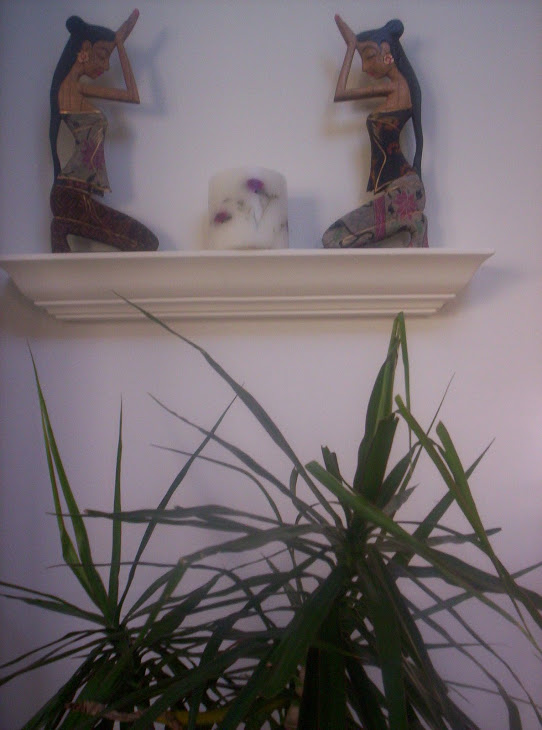
(This is a picture of an altar in my home. It is a simple one with a saying by Audre Lorde, "When I dare to be powerful - to use my strength in the service of my vision, then it becomes less and less important whether I am afraid." Audre Lorde 1934-1992)


In preparation for Meadville Lombard Theological School's move into the 20th Ward I am attending meetings and forming alliances in my role as Director of Contextual Ministry. I am identifying an array of organizations in an effort to get our name into the community and to meet our future neighbors. The Peace Rally below is one of many efforts initiated by the community to interrupt the rising tide of violence. Unfortunately I was not in town to attend. Sadly, this will not be the only one because the violence continues unabated. The Mayor's Office announced that this year was one of the most violence ridden years in history.

What are you doing to make a difference in your community and the larger world?
Blessed Be! Rev. Qiyamah

March, rally pushes a day of peace
By Richard Muhammad on Saturday, August 4, 2007


Zakryscha Hayes’ uncle founded the 6300-6400 S. Ellis Block Club some 40-years-ago in Woodlawn where she grew up and still lives. The block club isn’t as strong as it once was, but Hayes and some neighbors are determined to bring it back – and combat violence.

With a park on her block a place for numerous attacks and shootings, Hayes grew fed up. “Over the years there have been a number of murders in the Mamie Till Mobley Park in the playground. It’s just gotten out of hand and it just seems like everyone has become accustomed to the violence,” she said.

The violence was especially disheartening because the playground is named in honor of the mother of Emmit Till, the 14-year-old Chicago youth whose brutal murder by whites in a small Mississippi town helped ignited the modern civil rights movement. That spark might not have happened without Mamie Till Mobley’s fight for son’s body and her decision to conduct his funeral with an open casket. The young boy’s grotesquely disfigured face seemed to represent the horrific abuse Blacks had suffered for centuries when Jet magazine put the image on its front cover. The image sent shockwaves across America.

It seems almost inconceivable that 52 years later Blacks would still be dying, not at the hands of white oppressors, but at the hands of their own misguided brethren.

‘Stop the killings, save the community!'
Hayes wanted to hold a peace rally to remember the victims of violence and begin to make the park safe for children and youth. She turned to local leaders, like Bishop Arthur Brazier, who referred her to Warren Beard, the organizer for the New Communities Program at The Woodlawn Organization, one of three NCP partner groups. Beard went right to work.

Out of the meetings came an Aug. 4 march and day of peace on the playground.

The march for peace was led by Woodlawn’s Ceasefire program, which operates out of TWO offices and strives to bring youth out of lives associated with gangs, crime and violence.
Beginning with prayer and several statements from community leaders outside of the Harris Park District building. The march kicked off with chants, “Stop the killing!” “Put down the guns!” “Save the babies! Save our com-mu-ni-ty!”

Youth carried banners for Ceasefire and the New Communities Program as Rev. Leon Finney, of the Woodlawn Organization and executive director of Ceasefire TWO Woodlawn, and Alderman Willie Cochran led the way. They were followed by residents active in community policing groups, Harris Park board members, block club members and youth. Officers from the Chicago Police Department and the University of Chicago police, who have worked jointly on neighborhood public safety issues, escorted marchers down Drexel Avenue to 63rd St., and then south on Ellis Avenue to the playground. The University of Chicago is the third partner in the NCP Woodlawn trinity.

Marchers assembled on the playground, joining hands as Rev. Finney led off with a prayer, followed by words from Alderman Cochran.

Emmit Till’s family set off a storm of activity after his death, said Rev. Finney. There is no greater place to kick off an effort at non-violence and peace than this playground, said the longtime community activist.
Cochran recalled how as a very young child one of his earliest memories is the excitement and adult activity connected with the death of Till. He talked about pushing through the legs of the adults to see the Jet cover with that now famous photo.

The photo had an impact, Cochran said. Just before the march, the 20th Ward alderman called the fight against violence the new civil rights movement. “People have a right to live,” he said. 'You have the right to walk down the street and the right to sit on your porch."

Laura Lane, executive director of the Woodlawn Preservation and Investment Corp., the second of three NCP Woodlawn partners, congratulated march participants for getting involved. It takes partnerships with schools, the Chicago Park District, block clubs and people to improve things, she said.

We need to come together to provide programming for adults who need a second chance, opportunities to keep youth on the right path, and activities to keep senior citizens active, Lane said.

It takes persistence and courage to guide young people and end neighborhood violence, she said. “We can reclaim 64th St. and Ellis Avenue and move block by block to reclaim Woodlawn,” Lane added.

'We need to fight this thing together'
As chips and rinks were handed out, grills set up for cooking, balloon animals twisted into shape, basketball competition heated up on the court and music poured out of speakers, talked turned to the march and peace rally.

Tieria Munson has lived in Woodlawn for a month and moved to Chicago from Atlanta. She lost a cousin to gun violence and came out to show support for Ceasefire, at her aunt’s urging. “Me and my cousin were really close and since her life was taken, I was like ‘well I should get involved, just to help out a little to do my part,’ ” said the 11-year-old.

“We need more eyes to pay attention. And regardless of race we need to fight this thing together,” said Roger Harris, 28, who has lived in Woodlawn for 25 years. Harris said he has been racially profiled, which is wrong. Still, he added, the focus needs to stay on joint efforts to end violence.

“They (youth) need to know, it’s not the way to go. We need to start as a village. I was raised in an older environment. I remember when, if I went next door and my neighbor saw me doing something wrong, they would call my mother. I think we need to get that village back together and raise our children as a village,” said Harris.

Taking small steps toward big victories
“This type activity brings about awareness to the problem and sometimes you need to bring about awareness so that you can get to solutions,” said John Reynolds, Area 2 coordinator with the CAPS office.

Christine Perez, a CAPS community service representative for the Third Police District, said getting some residents to move beyond talk to action is a challenge. “Their commitment is important. Their participation is valued because they’re the ones who live in the community. So if they participate that makes it have a great impact, that they are actually taking this seriously,” she said.

A recent shooting was on 15-year-old Darrius Lightfoot’s mind when he decided to support the march and rally. Getting involved is important to stop the killings, he said.

Cierra Williams, 15, feels the community is getting better because people are marching and doing things. “I would like to see the children happy, and able to play outside without running in the house, telling their momma it’s shooting and stuff. I just like to see the people happy and stuff,” she said. Williams says she is active in neighborhood rallies and also helps out at a youth center.

Lightfoot also thought it was important not to condemn all Black youth. “We are not bad kids. We do really good stuff to help out this ‘hood. So I think they should stop stereotyping us, saying that we are bad kids, and we’re not,” said the young man. He is a youth leader with STOP, a local community-organizing group, and helps younger children at a program run by the NCP Woodlawn.

Warren Beard, NCP organizer at TWO, helped Hayes put the event together. The day will include food and entertainment and highlights senseless crime and youth issues, said Beard. “We are trying to let the community know through events like this that it’s going to take a collective effort to make a change. It’s going to be one block at a time, combined together as an organized community, to make the changes we’re looking for in Woodlawn,” said Beard.

“Just to look out on the basketball court and see the same guys that were just, a couple days ago shooting at each other, playing basketball together that is what we are trying to get accomplished,’ said Charles Hilliard, an outreach worker for Ceasefire TWO Woodlawn. The group has 65-75 regular clients, who may be gangbangers or tied to the drug trade, who are being taught their activity is unacceptable, said Hilliard. Some are back in school, pursuing GEDs and seeking jobs, he added.

Hilliard is a former gang member and has lived in Woodlawn over 35 years. “I am just trying to put something back in what I created,” he said. “It was easy for me to touch and tap into their system and let them know look we’re trying to do something else now, and you all need to create a whole different program.”

Ceasefire TWO Woodlawn is about a year and a half old, he said.

The work isn’t easy but the group is having success, Hilliard said. Ceasefire programs from Englewood, Auburn-Gresham and Humboldt Park also participated in the march and rally.

Zakryscha Hayes hopes revitalizing her block club and block will be the beginning of greater success and activity on other blocks. But in the 6300-6400 block of Ellis, her plans are to help residents learn about and tap into city services and resources and open up more options for youth. An immediate goal is to work with the Chicago Park District to do a $1 million renovation of the Mamie Till Mobley playground and maybe annex a bit of a vacant lot to add a tennis court, said Hayes.

Community Partnership Program Hosts Site Supervisors


September 18 was an exciting day at Meadville Lombard Theological School. The attendance of the nine site supervisor's represented the culmination of months of conversations and meetings in an effort to create potential sites with non-profit organizations in the 20th ward for our first year students. The group was present and accounted for and witnessed holding hot-off-the-press copies of their Supervisor's Handbooks that are intended to provide guidance and tips on everything from supervision of students to site visits and copies of forms needed for the implementation of the program.

Afterwards a luncheon was held to introduce site supervisor's to Meadville Lombard's faculty and staff. All in it it was a successful gathering and meeting.
Blessed Be! Rev. Qiyamah

October is Domestice Violence Awareness Month


(This is a picture of a bill board in Romania and it is saying something to the effect that domestic violence is a crime.)

Statistics on Domestic Violence in the United States
*Every 15 seconds a woman is physically assaulted in her home.
*Children who witness violence grow up believing that violence is a reasonable alternative to solving problems. 60% of children from violent homes become abusive adults.
*Domestic violence is a major cause of homelessness. A large percentage of women and children living on the street became homeless because of domestic violence.

Violence Against Women in the United States of North America - A Glimpse into the Past


Violence Against Women
Having come to consciousness as the daughter of a factory worker in Detroit I was impacted by my working class background and my status as a young African American female exposed to the Civil Rights Movement, the Black Power Movement and most importantly the Movement to End Violence Against Women. As a survivor of physical and sexual assault I am always highly cognizant of October and the pursuant activities designed to address violence against women. It often feels like there is less and less time between one October and the next as a flurry of activities are generated to heighten the awareness that every woman deserves to live free of violence. Sometimes it seems to me that the violence is so pervasive that one cannot escape it. There is never a cease fire or moratorium. Wouldn't it be nice to declare a moratorium on violence against women and all forms of violence? To wake up and turn on the radio and not hear about reports of rape, domestic violence or sexual harassment. Wouldn't it be nirvana to turn on the tv and not be subjected to atrocities against women as entertainment in the form of CIS and other crime shows.

Historic Developments
I was speculating on the events and policies that have made a difference in bringing the issue before the public and stripping the curtain of protection away that makes this crime so invisible. Without a doubt, the most significant legislation passed in this country to date that addresses violence against women is the Violence Against Women Act of 1994. This legislation signaled a pivotal moment in the collective lives and efforts of women and their male allies that had worked tirelessly to galvanize the resources of this nation to address this shameful problem. Heretofore the problem was viewed as a personal problem, a family problem that others did not get involved in, very much like child abuse had been perceived in previous years. However, the valiant efforts of a few women grew over the years as their ranks expanded to include not just those "militant women" that kept pushing the issue into the light of day and out of the closets from behind closed doors, but the movement to end violence against women eventually spread to everyday women who didn't identify as feminists but simply got "sick and tired of being sick and tired." Grandmothers, middle class women, poor working class women, single women, single parent mothers and the debutante, all had something in common - they were hiding shameful secrets and living in fear due to the violence in their lives.

I would like to tell you a story. The story is about how the first shelter was started in Minneapolis, MN in the early 1960s when a group of women were at an Alcoholics Anonymous meeting sitting around talking while their partners were meeting. One woman revealed that she was being beaten, then another, then another. Before the evening was over they all admitted that they were in abusive relationships. They agreed to meet and do something about it. One woman offered her home and they all moved in together and began to share child care and to experience what it felt like to live without the fear of violence.

This story might be taken as a sort of urban legend if we didn't all know women that opened their homes to individuals down on their luck or hid a friend from an abusive partner? So while it may have taken on a life of its own over the years, I love to tell this story to illustrate how creative we become when we are willing to take the risk to reach out and change our lives for the better. Since that time we have developed shelters and transition housing and full service programs with staff and batterers groups. Battered women are no longer stigmatized and education is fairly accessible. However, the problem is still quite prevalent. Nevertheless, the passage of the Violence Against Women Act of 1994 reflected effective coalition building between grass roots women and organizations and institutions from all levels of society, from activists to elected officials. Its passage represented for activists, one of their finest hours in the movement to end violence against women. Many of these women, themselves marginalized because of the unpopularity of the issue had worked tirelessly either as volunteers or in low paying positions in shelters, rape crisis centers, on crisis hot lines, community centers, law clinics and in academia helping battered women and their children at a time when it was not chic or the popular thing to do. They raised the issues while educating and advocating for change.

I will share one more anecdote and then leave you to peruse the Act by clicking on the link below:

National Coalition Against Domestic Violence (NCADV)
The Steering Committee for the National Coalition Against Domestic Violence was an organization dedicated to ending violence against women and children. NCADV was comprised of Steering Committee members appointed from each state that met in Washington, DC . I was elected to the Steering Committee in the early 1980s. I remember walking into the room with these women seated around the table that I had read about and heard about. There was an energy around the room and I felt like I was home and that my life would never be the same after meeting these amazing women. They were the most powerful kick ass women that I had ever met. They baptised me in the fire of their passion and activism. The Battered Women's Movement was where I found my voice and what eventually become my ministry. Women like Ruth Slaughter, Caitlin Fullwood, Beth Richey, Gwen Davis, BJ Bryson, Tilly Blackbear, Nan Stoops, Suzanne Pharr, Kerry Lobel, Barbara Hart, Diana Onley Campbell, and Deborah Muhammad are some of the women that I came to know and respect. They were my role models while I was trying to find myself and to heal from the violence of my childhood and adulthood.

I saw Caitlin Fullwood several years ago. We were both reminiscing about times gone by when she turned to me and said, "We old broads are still going strong." We both laughed riotously. I believe our laughter was partly out of a knowledge that we had survived and were not crazy, on drugs or dead. And partly just the joy of being alive, and older and wiser. Ginny NiCarthy just celebrated her 80th birthday folks, and she is still going strong and raising hell! I would love to see some of these individuals again. Occasionally I see their names associated with the wonderful things they are still doing, and I think about Caitlin's hilarious and insightful comment. Yes, we broads are still going strong!

On another occasion Steering Committee members had convened once again to handle the business of eliminating violence against women and children. However, in addition to our usual business meetings and caucusing we had scheduled visits with our congresspersons to talk about violence against women and children and to persuade them to support the pending legislation that we felt could usher in a dramatic shift in how our nation perceived domestic violence. We were a motley group because many of the women were what I call "earth women" who did not like to dress up. Although we certainly had our exceptions! We had strategized about what to say and we were all primed and ready to go. Each of us were organized in groups of two or three's. We were told that we would have no more than 10 minutes to make our case with legislative aides. Only some of us had been lucky enough to schedule with our congress persons. I had never seen so many pantie hoses, suits and dress up clothes in all the time I had been serving on the Steering Committee. Some of the women complained about having to wear pantie hose and bras. One member indicated the only time she wore them was when she lobbied. I was excited. I had never been to the capital, let alone paid a visit to my congressperson. Even now when I think about it I get excited at the role we played to influence those in the corridors of power. While I was a little naive back then, it was moments like that when I look back in wonder, amazed at the shy, battered and wounded little girl that had managed to shed her docility and break the silence that I experienced, and before me my mother and other women have endured in this country and around the world. This was only one of the many times that I have reflected on how far I have come, and yet how far I plan to travel in my journey toward transformation.
Blessed Be!

H. R. 2876 (Introduced-in-House)

Drill, Drill, Drill


(Enjoying the awe and beauty of a recent sunset taken while I was standing in the middle of 61st street and S. Woodlawn in Chicago, IL - September, 2008)


The thought provoking piece that follows was written by Eve Ensler, the well-known activist and writer of "The Vagina Monologues", and many other pieces. On the day after the first presidential debates and the eve of the vice presidential debates it behooves us to consider what is at stake in this upcoming election. Ensler's words are a strong reminder to us.
Blessed Be! Rev. Qiyamah
>
>> Drill, Drill, Drill
>>
>> I am having Sarah Palin nightmares. I dreamt last night
>> that she was a member of a club where they rode snowmobiles and wore the
>> claws of drowned and starved polar bears around their necks. I have
>> a particular thing for Polar Bears. Maybe it's their snowy whiteness
>> or their bigness or the fact that they live in the arctic or that I have
>> never seen one in person or touched one. Maybe it is the fact that they
>> live so comfortably on ice. Whatever it is, I need the polar bears.
>>
>> I don't like raging at women. I am a Feminist and have spent my life
>> trying to build community, help empower women and stop violence against
>> them. It is hard to write about Sarah Palin. This is why the Sarah Palin
>> choice was all the more insidious and cynical. The people who made this
>> choice count on the goodness and solidarity of Feminists.
>>
>> But everything Sarah Palin believes in and practices is antithetical to Feminism which for me is part of one story -- connected to saving the earth, ending racism, empowering women, giving young girls options, opening our minds, deepening tolerance, and ending violence and war.
>>
>> I believe that the McCain/Palin ticket is one of the most
>> dangerous choices of my lifetime, and should this country choose those
>> candidates the fall-out may be so great, the destruction so vast in so
>> many areas that America may never recover. But what is equally
>> disturbing is the impact that duo would have on the rest of the world.
>> Unfortunately, this is not a joke. In my lifetime I have seen the
>> clownish, the inept, the bizarre be elected to the presidency with regularity.
>>
>> Sarah Palin does not believe in evolution. I take this as a
>> metaphor. In her world and the world of Fundamentalists nothing changes
>> or gets better or evolves. She does not believe in global warming.
>> The melting of the arctic, the storms that are destroying our cities,
>> the pollution and rise of cancers, are all part of God's plan. She
>> is fighting to take the polar bears off the endangered species list. The
>> earth, in Palin's view, is here to be taken and plundered. The
>> wolves and the bears are here to be shot and plundered. The oil is here to
>> be taken and plundered. Iraq is here to be taken and plundered. As she
>> said herself of the Iraqi war, "It was a task from God."
>>
>> Sarah Palin does not believe in abortion. She does not
>> believe women who are raped and incested and ripped open against their will
>> should have a right to determine whether they have their rapist's
>> baby or not.
>>
>> She obviously does not believe in sex education or birth
>> control. I imagine her daughter was practicing abstinence and we know
>> how many babies that makes.
>>
>> Sarah Palin does not much believe in thinking. From what I
>> gather she has tried to ban books from the library, has a tendency to
>> dispense with people who think independently. She cannot tolerate an
>> environment of ambiguity and difference. This is a woman who could and
>> might very well be the next president of the United States. She would
>> govern one of the most diverse populations on the earth.
>>
>> Sarah believes in guns. She has her own custom Austrian
>> hunting rifle.
>> She has been known to kill 40 caribou at a clip. She has
>> shot hundreds of wolves from the air.
>>
>> Sarah believes in God. That is of course her right, her
>> private right.
>> But when God and Guns come together in the public sector,
>> when war is declared in God's name, when the rights of women are
>> denied in his name that is the end of separation of church and state and the
>> undoing of everything America has ever tried to be.
>>
>> I write to my sisters. I write because I believe we hold
>> this election in our hands. This vote is a vote that will determine the
>> future not just of the U.S., but of the planet. It will determine
>> whether we create policies to save the earth or make it forever uninhabitable
>> for humans. It will determine whether we move towards dialogue and
>> diplomacy in the world or whether we escalate violence through invasion,
>> undermining and attack. It will determine whether we go for oil, strip
>> mining, coal burning or invest our money in alternatives that will free
>> us from dependency and destruction. It will determine if money gets
>> spent on education and healthcare or whether we build more and more
>> methods of killing. It will determine whether America is a free open
>> tolerant society or a closed place of fear, fundamentalism and
>> aggression.
>>
>> If the Polar Bears don't move you to go and do everything in your power
>> to get Obama elected then consider the chant that filled the hall after
>> Palin spoke at the RNC, "Drill Drill Drill." I think of teeth when I
>> think of drills. I think of rape. I think of destruction. I think of
>> domination. I think of military exercises that force mindless
>> repetition, emptying the brain of analysis, doubt, ambiguity or dissent.
>> I think of pain.
>>
>> Do we want a future of drilling? More holes in the ozone, in the floor
>> of the sea, more holes in our thinking, in the trust between nations and
>> peoples, more holes in the fabric of this precious thing we call life?
>>
>> Eve Ensler
>>
>> September 5, 2008
>>
>>

Wednesday, September 24, 2008

Puttin' Down Roots in Chicago


My new place has a fire place. However, it doesn't work! It is just for show!lol That is a coffee table in front of the fireplace.


It has windows galore which my cat Lily loves!

If you are like me then home represents a respite from the hustle and bustle of life. More than a place to lay ones head it is a womb/nest/ to hold me and revitalize me. Colors and textures and images all play an important part in stimulating and soothing me while providing a creative outlet. It doesn't take much to make me happy. Right now I am spending time creating a haven and respite to retreat to. My younger daughter Kaleema was instrumental in helping me to pull together my new space with some creative pieces and colors. See some of the before and after pictures.

Having lived in dorms and tiny spaces and others spaces over the last two years it is nice to have my own place. Drawing a paycheck once again I can spend money on some basic furnishings. Funny how guilty I feel spending money during such dire times when I know that some people do not have food to eat. My philosophy is as long as I am not being extravagant and selfish and that I am in service to others then I can tap into the "wealth" that we all deserve to have. I will talk more at a later time about my service and ministry.


This is my bathroom. My apartment is an old one with only one bathroom that is rather small.


This is the kitchen before installing my new stove.


This is my bedroom. It was completely empty since I had no furniture except a futon and bookcase.


This is my office/guest bedroom with my futon that served as my bed until I was able to purchase one.

You have seen the "before" pictures. Now here are some "after" pictures!


A little bit of paint, curtains and furnishings make a big difference.


This swag lamp and table add pazzaz as great accessories and are very utilitarian.


This is the previously plain black futon with a new African print cover going for an African motif.


This is my queen sized bed in my queen sized bedroom. It is so hugh that I have a book case and a bistro set (table and two chairs) that sit in front of the window that I sometimes take my meals at while eating and looking out the window onto the world.


The living room will provide a great entertaining space. That will be a new persona for me since I have not previously been one to entertain. But this apartment just lends itself to entertaining.


The galley kitchen works for me and opens up into the dining room which is empty except for curtains, pictures and chairs. I am looking for a dining room table.


This is an incredible mirror in the foyer and small bench that picks up the earth tones of orange and beige that bring together a peaceful color scheme.

I am grateful for all blessings that manifest in my life in the form of money, friendships, a roof over my head, food, clothing, my career and those amenities that allow me to enjoy life.

What blessings have you been given that you take for granted? How can you be of service to others as well as be true to yourself and practice abundance and prosperity?
Blessed Be! Rev. Qiyamah

Sunday, August 31, 2008

Trouble in Paradise: Domestic Violence in Costa Rica

Globally, as women mobilize to fight gender-based violence they garner support and protection even in extremely hostile and difficult circumstances to overcome violence. Sexual assault, domestic violence, sexual harassment and stalking are only a few of the forms of gender-based violence that women are subjected to around the world. Some gender-based violence reflects patriarchal notions that view women as male’s property, less valued and therefore inferior to males. Other causes of gender based violence point to global capitalism’s commodification of the bodies and labor of women and children. Worldwide, flourishing markets in adult entertainment and pornography exploit women and children’s bodies, thus appropriating them for the pleasure of mostly male clientele. Additionally, culturally specific forms of violence victimize women and include some of the following: female circumcision in Africa and the Middle East; honor killings most frequently in India, Bangladesh, Egypt, Israel, Jordan, Pakistan, Morocco, Iraq and Iran; trokosi in Ghana, dowry deaths in India and rape in the United States, England and South Africa.
Globally, women and their male allies have been working to name these acts of violence against women as criminal acts, punishable by law. In some instances they have accomplished the difficult task of elevating gender-based violence from an “individual” problem to a “social problem,” thus bringing it out of the purview of the private sector into the public arena. These 1997 statistics speak to both the successes and the tenuous progress in overcoming this social problem:
• Legal protection against violence against women has occurred in only ¼ of all counties in the world
• Only 44 countries world wide have laws against violence toward women
• Only 27 countries have laws against sexual harassment
• Only 17 countries have marital rape laws

Definition
Gender-based violence restricts women’s contributions and their abilities to live full and productive lives, thus negatively impacting their familial, societal and economic development. Additionally, gender-based violence often leads to the disintegration of families, medical problems, inability to fulfill employment obligations and even loss of life. For the purpose of this paper gender based violence is defined as follows:
any act of gender-based violence that results in, or is likely to result in, physical, sexual or psychological harm or suffering to women, including threats of such acts, coercion or arbitrary deprivations of liberty, whether occurring in public or private life. Violence against women shall be understood to encompass but not be limited to: physical, sexual and psychological violence occurring in the family and in the community, including battering, sexual abuse of female children, dowry-related violence, marital rape, female genital mutilation and other traditional practices harmful to women, non-spousal violence, violence related to exploitation, sexual harassment and intimidation at work in educational institutions and elsewhere, trafficking in women, forced prostitution, and violence perpetrated or condoned by the State.

Domestic Violence in Costa Rica
In Costa Rica, domestic violence, prostitution and sex trafficking constitute the most egregious human rights violations against women.
The Costa Rican government identified domestic violence against women and children as a serious societal problem. The National Institute for Women (INAMU), an autonomous institution created in 1998, and dedicated to gender equality, received 63,990 calls on its domestic abuse hot line from January through October. During this same period, INAMU counseled 4,097 female victims of abuse in its San Jose office (the capital of Costa Rica) and accepted 194 women in INAMU-run shelters. INAMU maintained 41 offices in municipalities around the country and had trained personnel working in 32 of the country’s 81 cantons. The Office of the Special Prosecutor for Domestic Violence and Sexual Crimes prosecuted 448 cases related to domestic violence during the year, compared with 456 cases in 2001. INAMU reported that 24 women were killed in incidents of domestic violence during the year, compared with 11 in 2001.

Public Policy Legislation in Costa Rica
The 1996 Law Against Domestic Violence established precautionary measures to help victims of domestic violence. The Legislative Assembly enacted a Bill to Qualify Violence Against Women as a Crime, which classified certain acts of domestic violence as crimes and mandated their prosecution whether or not the victim pursued charges against the perpetrator. The authorities incorporated training on handling domestic violence cases into the basic training course for new police personnel. The domestic violence law now requires public hospitals to report cases of domestic violence against women. It also denies the perpetrator possession of the family home in favor of the victim. Television coverage of this issue increased in news reporting, public service announcements, and feature programs. Reports of violence against women increased, possibly reflecting a greater willingness of victims to report abuses rather than an actual increase in instances of violence against women.

Demographics
As an African American female, I am interested in the affects of domestic violence and what if any services are available to women in Limon, a town where the largest population of AfroCaribbeans reside, in addition to the nearby town of Puerto Viejo. In 1996 the black population of the province of Limon was 62,094. The total population of Costa Rica is 3,202,440. Males comprise 1,604,305 and females, 1,598,135. While no accurate statistics are available on the black population, statistics from 1984 estimated them at 58,666 or 1.9% of the total population.

How this Issue Informs My Ministry
Much of my life and now my ministry have been informed by my advocacy to eliminate violence against women and children. I was personally motivated to understand family violence, an issue that affected my own family, as it does so many others. Thus, I use my personal and professional experiences in my ministry of interfaith social justice to challenge the pervasive silence that continues to exist around societal violence.

Afro Costa Ricans
As an African American womanist theologian, I seek to understand the plight of oppressed peoples and how to minister to them using an integrated approach combining my pastoral, social justice and prophetic voice.
My research in Costa Rica indicates that Limon is the home to the majority of the country’s 100,000 Afro Costa Ricans that are located on the Caribbean Coast. These English speaking descendants of 19th century Black Jamaican immigrant workers came voluntarily to Limon to work on the construction of the railroad. This was in contrast to their descendents that were brought to Jamaica as slaves primarily from Ghana during the 19th century. While Afro Costa Ricans enjoy full rights of citizenship, including the protection of laws against racial discrimination, as racial minorities they are often underserved and under represented in all spheres of society. Oppressed peoples lives are often invisible to the majority and certainly to mainstream researchers. Using postcolonial feminist theory I ask not only who is missing in the research but I assume that certain power dynamics exist that impact the lives of historically marginalized peoples. Evidence of such inequities are confirmed in the person of the previous President of Costa Rica, Miguel Angel Rodriguez. Rodriquez publicly apologized at the World Conference Against Racism in Durban, South Africa held August 31-September 7, 201 for past injustices committed against AfroCosta Ricans (as well as to the 64,000 indigenous peoples and the 8,000 Chinese in Costa Rica). Some critics assert these injustices continue today.
My preliminary research findings indicate that there is little mention in the literature about domestic violence among Afro-Caribbean women in Costa Rica. However, a review of Afro-Caribbeans reveals a vicious cycle with limited access to goods, services, and opportunities. Low education and labor market discrimination have resulted in high unemployment and further marginalization. One can draw conclusions from research findings on child abuse such as that conducted with 50 children in Limon and 50 in San Jose:
The majority of the young people come from poor homes characterized by family violence. Their rights have been violated since their earliest childhood, especially
those relating to parental protection and care, protection against all forms of abuse
and protection against the use of drugs and illegal substances. In addition, the lack
of government interventions exacerbates the problem.

The limited criminal justice capacity in Costa Rica makes it even more unlikely that
instances of domestic violence will be prosecuted to the fullest extent of the law. Many judges retain traditional notions of family patriarchy and therefore are unwilling to intervene in domestic violence cases. A a result, only 20% of requests made for protection nationally are resolved in favor of the applicant. Many of the women murdered in the past have had protective orders.
AfroCaribbean women’s oppression in Costa Rica is not merely limited to stereotypes
and discrimination but they also represent the poorest of the poor. Thus, the feminization of poverty is particularly evident among AfroCaribbean women in Limon. We can intuit that these same women suffer from the violence reflected in the larger society that is so prominent in poor segments of the population whether we have research to substantiate it or not. Extrapolating from information is sometimes a beginning. Of four countries recently surveyed, Australia, Mozambique, Costa Rica and Switzerland, Costa Rica had the highest lifetime levels of overall domestic violence and the highest levels of sexual violence. More than 90% of the women reported being raped by their husbands.
Epsy Campbell Barr, founder and director of Afro-Costa Rican Women Organization founded in 1995 contends that since the time of the trans-Atlanta slave trade, Afro descendants in the Americas have been subjected to various forms of exclusion and racism. Women of African descent have also faced sexism that has prevented them from accessing the technical and political tools necessary to develop personally and as effective leaders of their communities.
This research allowed me to identify some of the barriers to safety such as poverty, social marginalization, deterioration of public facilities and to tap the voices of women like Barr that are working with women to shift the tide of violence and discrimination.

During our visit to Puerto Viejo, Costa Rica my daughter, Kaleema contacted a local attorney that has been doing some human rights work. See below the pictures I took when I accompanied Kaleema to Angie's office.


Local Attorney, Angie


Kaleema meeting with Angie to talk about what is going on in the area and her involvement.


L-R Angie and Kaleema


L-R Qiyamah and Angie

Saturday, August 30, 2008

Visions from Costa Rica


Come with me to the land of the Incas in Costa Rica as we take a pictoral journey to one of the most beautiful places on the Caribbean side of Costa Rica, Puerto Viejo. Puerto Viejo is a small tourist town five hours outside of San Jose, the capital with a population of about 2,000 . It is known for its beaches and surfing. Unlike other areas it is not developed and doesn't have golf courses or a lot of condo's etc. (yet). It is still undiscovered. The trip from San Jose is spectacular. The drive takes you through the mountains, then through banana and pineapple farms and then the Coast where you see the beautiful beaches and the waves rushing to meet you.
Blessed Be! Rev. Qiyamah


Kathryn and I decided that we would take a full day and go on a field trip to a nearby town that she was told had the best seafood in all of CR. While the person exaggerated the food was good but fairly typical of the good food we had grown accustomed to. Little did we know that Kaleema would make a feast that night that put Maxie's, the name of the restaurant to shame.

So we rented bikes and rode over an hour after having walked to the bike rental. That day we ended up swimming, having lunch and riding back to return the bikes. But things didn't end there. We went to a Butterfly Garden. You will see some of the pictures we took.


This is the bike that I rode to Manzanillo. Part of the trip was through a State Park. It was a glorious ride. I had not ridden a bike in years. It felt good. Fortunately, I had been exercising almost everyday in CR and so I was in decent shape.


Kathryn stopping to take one of our rest breaks.


Qiyamah stopping to take a rest break.


Melanie enjoying the coolness of the water at the local waterfall.


Kathryn looking like Eve in the Garden of Eden. lol


L-R Kaleema and Qiyamah posing at the waterfall


L-R Kathyn in her swimsuit and Melanie enjoying waterfall


Kaleema at the beach in her itty bitty bikini!


We visited a local water fall. While there is a much larger one outside San Jose, the capital which is almost five hours away, this local waterfall suited us just fine. We had it all to ourselves for over an hour and so Kathryn went skinny dipping. As you can see from the later pictures the rest of us were content to merely dip our toes in the cool waters. lol


Here I am cooling my heels.


Kathryn Liss and I posing at the waterfall.


L-R Kaleema H. Nur and her friend Melanie.

Both Kaleema and I invited friends to join us in CR. Her friend Melanie accepted the invitation as did my friend, Kathryn. Both Kaleema and Melanie had just taken the bar right before coming to Costa Rica so it was a treat to themselves. Kaleema related a story about one of her Jamaican friends whose grandmother sat outside the building where her grand daughter was taking the bar and prayed the entire time. What a powerful image that evoked when she recounted the story to me.We also had a prayer circle going for Kaleema. She told me that she and another friend she roomed with built an altar in the course of the two days that they sat for the Bar.


Keep an eye on this leaf. It will be used very strategically in a later scene!


Melanie cooling her heels


This is one of the insects that they had on display at the Butterfly Garden that Kathryn and I visited. It is non poisonous and was not alive. It was a good three inches in diameter. We constantly were reclaiming the house we stayed in from his spider relatives and their intricate webs. I found few in the house but they were everyplace outdoors, in the trees, right outside our kitchen window weaving their webs. One sat in his web above the refrigerator for over two weeks with no discernable movement. I finally touched it to see if it was in fact alive. It was! I drew a truce and my compromise was to place it outdoors! I didn't think our guests would appreciate having a spider spinning over the refrigerator.


If you look very carefully you can see two brown butterflys, one in the right hand corner and the other is in the left corner. These were two of the butterflys that survived at the Butterfly Garden.


Hibiscus trees and bushes grow wild in Costa Rica. A local woman made a concoction of hibiscus leaves and black root and told me to put it on my hair as a conditioner. I folowed her instructions and blended the mix. But I forgot to strain it and I was picking leaves out of my hair for days! lol My daughter enjoyed telling the story to her friends when we went to town.


The Bird of Paradise grows wild in CR as shown here!


I visited a butterfly garden with a friend, Kathryn Liss and we saw many beautiful butterflys. Unfortunately, this was the season that they naturally die off so we saw a lot of dying butterflys and witnessed part of their cycle of life and death. We had to climb a long and steep gravel road to get to the garden. It was a little disappointing to see almost as many dead or fluttering butterflys close to death as those that were alive and flying around. They are enclosed in a huge net canopy where there is a path to walk around and see them in a "natural" habitat.


We were not prepared for the breathtaking view in the back of the building at the Garden. Evidently a staff person lives there. Can you imagine waking up to this every morning.


Here are more of the beautiful hibuscus bushes that are everywhere.


The lush vegetation present in Costa Rica is incredible. I overheard a mother informing her child that, "there are species of plants in CR that do not exist anywhere else in the world!" I can believe it. Plants like Bird of Paradise that we pay a fortune for at the florists in the USA simply grow wild in CR. I picked some right out of our garden for a floral arrangement to welcome our two guests.


Just behind these trees is the beach and the ocean!


Kaleema taking a walk to town. Most smart people rode bikes!


Qiyamah taking a walk to town.


A picture perfect scene of the ocean and some driftwood.


This is a view of the house and garden - Casa Cacoa that we stayed in in Cocles. It was several miles from the town of Puerto Viejo, Costa Rica. We walked whenever we went into town and if it was after dark when we returned we rode a taxi home for safety. The walk along the mostly gravel road was very dusty. So we got smart and walked along the beach and then when the beach ran out we walked the path in the woods. That route was cooler and gave us a view of the ocean along the way. The walk into town was an hour but we didn't mind because the path was so interesting and enchanting.


La Cocina de la Senorita Kaleema - The kitchen of Kaleema. Kaleema prepared all the meals and treated us to some exquisit food delights. She was also very bossy about her kitchen and I made a sign that read, La Cocina de la Senorita Kaleema.


This is a view of the porch. Notice how the porch and interior of the house flow into each other when the shutters are open. It was a wonderful feeling to bring the outdoors inside and the indoors outside.


I wasn't the only one having a working vacation. This is a picture of Kaleema standing at her "post" where she stationed herself to work on her laptop. She also has the coolest collection of downloaded music that included Sweet Honey in the Rock, Ben Harper, Cassandra Wilson, lots of reggae etc.

Kaleema actually had an interview via skyp while in Costa Rica. We called it her guerilla interview because of the way and where it took place. She arranged with the local internet cafe to borrow their earphoness because the interview was earlier than they opened. So imagine her sitting outside the cafe on the lawn at 8:30am getting ready to connect with an interview committee for an important two year fellowship. She has just completed the bar and so she was being very strategic about her first position post graduation and wanted to make a good impression. Before she connected with the interview committee a dog comes charging at her all bandaged up and sits down beside her and starts howling. A rooster had already been crowing and alerting everyone in hearing distance that it was time to get up. Fortunately, the rooster stopped crowing, the dog stopped howling and my daughter was invited to join the staff at the University of Austin's School of Law's Human Rights Program. The positioin fits her like a glove. We are all so excited for her!


This is my work space and the inspiring view that provided my inspiration for writing. Unfortunately, one has to pay for internet by the minute at internet cafes so I did no blogging while in Costa Rica. During my previous visit I had access to internet and was able to blog almost on a daily basis. It really makes a big difference.


This was one of the last pictures I took on my way home.My daughter, Kaleema and the caretaker and housebuilder, Leo assisted me in my departure back to Chicago. We lived down a gravel road that defied rolling suitcases and hence the need for the assistance. At night it was pitch black and we would walk down the road to our house with the help of flashlights.


This is the beautiful house that we stayed in. It had floor to ceiling shutters that opened up the entire downstairs which we took full advantage of even though we paid dearly for it at night with mosquitoes. Most places have mosquito nets but somehow only one out of the three bedrooms had a net.


This is the view from the kitchen window. There was not a window that did not have a spectacular view.


Opps! This is me caught in the act of taking a siesta!


In retrospect it is much too difficult to try to capture the array of feelings and emotions that my nearly month long visit to Costa Rica elicited for me. My trip was not about a typical tourist experience, although I did some touristy things. More importantly, it is about stepping away from my life as I know it in the USA and creating an experience with family and friends that invites me into a different encounter with myself and others that pushes me out of my comfort zone and invites me to witness to some degree or another what the world is like for others. I also did some basic research on domestic violence in Costa Rica. So while some things are different, other things are very similar and familiar to me.

At First Glance
I first traveled to Costa Rica in January, 2008 while my daughter,Kaleema, was doing an internship at the Inter American Human Rights Court. My friend, Stephanie Berry joined us in Puerto Viejo where we stayed at Tierra del Suano, a resort center in Playa Chiquita. This time we rented a house for an entire month.

It was a working vacation for me. I rested, read, sat in the sun, lazed in the hammock and did some touristy things. Other times I worked to put together a Handbook for a Program that I will be involved with called, Community Partnership Program. Having the advantage of a beautiful environment with the leisure time to be creative was very inspiring and led to very productive work for me.

Pictures
While pictures are a poor substitute for sharing my experience, it is the most efficient way to even try to share my experience. So in closing, I leave you with the following wisdom:

*Costa Rica is a beautiful country. If you are into nature you will want to create the opportunity see it for yourself. San Jose, the capital, is like most urban cities. It is the country side with its lush tropical rain forests that is breath taking. Seeing the effects of globalism and the politics of American capitalism reminds me of our overwhelming influence on others and the need to be mindful of the fact that we share the planet with others.
*If you are of African descent you will be reminded of the diasporic nature of African peoples as you see blacks presence in Caribbean countries like Costa Rica
*Seeing Americans that had relocated to Costa Rica gave me some models and reminded me that I want to seek a simpler and less expensive lifestyle in my senior retirement years and that want to be planning and identifying a place now.
*Everytime I place myself in different settings I am forced to tap different parts of me that might otherwise possibly lay dormant.
*Spending time with my daughter and friends always allows me the opportunity to practice grace and gratitude as I work to be in integrity with them and learn more about engaging on deeper and deeper levels.

Question: When was the last time you stepped away from your everyday life and had time to think about your presence in the world and what that means for you and others?
Blessed Be! Rev. Qiyamah