Tuesday, April 29, 2008

Springtime in Chicago!


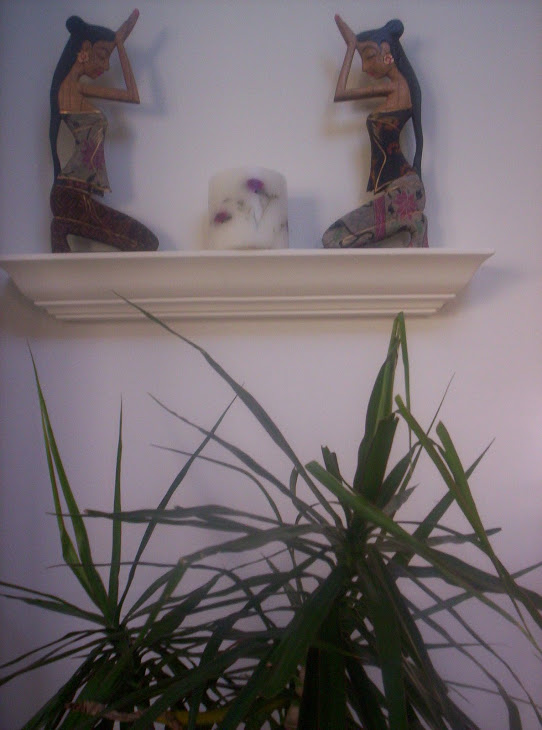
These pictures are evidence that spring is just around the corner here in Chicago. And for that I am most grateful!

What are you grateful for today?
Blessings! Rev. Dr. Qiyamah A. Rahman

Monday, April 28, 2008

The Story of the Woodlawn Community and its Development


I am working on the story that accompanies these pictures. Those of you that are familiar with the Woodlawn Community will recognize most of these scenes. They are the result of a two and a half hour tour with Andrew Greenlee, former Chicago Police Commander and employee of the Woodlawn Organization.
Blessings! Rev. Qiyamah

Minister in Residence: Rev. Richard Boeke at Meadville Lombard Theological School


L-R Rev. Richard Boeke, Visiting Minister in Residence and Rev. Qiyamah A. Rahman, Field Education Developer for the Community Partnership Program at Meadville.


These two dapper gentlemen are L-R Rev. Richard Boeke and Rev. Jim Hobart, Interim Director of Field Education and Adjunct Professor for Unitarian Universalist Polity


L-R Rev. Richard Boeke and Rev. Qiyamah A. Rahman in the Curtis Room at Meadville Lombard Theological School.

Dr. Boeke, a former member of the board of Tsubaki America, is the part-time minister of the Unitarian church of sevenoaks in England, his wife, Johanna, is the minister of the Unitarian church in Horsham, Worthing and Godalming in England. The Boekes previously served is ministers of the Unitarian church in Berkeley, CA.

The two essays that follow were written by Rev. Dr. Boeke. They reflect his passion for peacebuilding, internationalism and interfaith dialogue:


1996 IARF Congress in Korea
Over a dozen Tsubaki priests and members attended the August 1996 Korea Congress of the international Association for Religious Freedom (IARF). The IARF, founded in 1900, is the world's oldest interfaith organisation.

At the closing business meeting, Dr. Yukitaka Yamamoto, chief priest of Tsubaki Grand Shrine, was elected president. Dr. Yamamoto is a leader in bringing Shinto into the Dialogue of World Religions. Since he led Shinto prayers at the United Nations 30 years ago, Dr. Yamamoto has taught that the "Kami Spirit" of "Reverence for Nature" embraces the whole earth. Thus Shinto is called to work in harmony with other faiths for peace and understanding.

This was a difficult Congress to arrange. Many Koreans view the Japanese as oppressors. In the days just before the Congress, Koreans who had been used as "comfort women" by the Japanese troops with anger rejected the "unofficial compensation" offered by Japan.

Is interfaith dialogue worth it? Especially in three different languages in a unfamiliar land? A Korean Jesuit described Korea to me as "The Ireland of the Orient." Like Ireland, Korea is divided into North and South. Like Ireland there are violent demonstrations for unification. Like Ireland there is deep resentment of an "imperial" island to the west which often invaded. For Ireland the invaders were English: for Korea the invaders were Japanese. Like Ireland, religion is strong in Korea. Of 40 million Koreans, perhaps 20 million follow various forms of Buddhism. Over 10 million are Protestant Christians. About 3 million Koreans are Catholic.

Our hosts were Won Buddhists, founded in Korea seventy years ago. Their focus of worship is a circle which reminds them of "the interdependence of all things. There is no independent existence." In keeping with their teaching they invited the IARF Congress to meet at the beautiful campus of the Won Kwang University in Iksan City, about 100 miles south of Seoul. The University provided a first rate modern art show, three glorious concerts featuring drums and dance, and an excellent air conditioned center for the Congress.

Japanese/Korean dialogue became a vital part of the Congress. In a moving speech, Rev. Norio Sakai of Rissho Kosei-kai (Japanese Buddhist) apologised to the Koreans. Later, in the Study Group on Religious Practice, a young woman from Japan told her experience as a volunteer aide in a Korean home for the elderly. When the Koreans learned that she was Japanese, several expressed their hatred of her. At night she would go home in tears. She prayed for strength to continue. To be an agent of the Buddha spirit of compassion. After weeks, one of the Koreans thanked her.

In his opening address, John Buehrens, president of the North American Unitarian Universalist Association (UUA), said, "The religion that cannot be criticised becomes a threat to religious freedom." His speech on five virtues closed with hope:

"A quiet confidence that the resources are there to make the world a better place of more justice and love and less suffering."
Other speakers included Christine Hayhurst of Great Britain and Dr. Fe.L. Sycip, a Filipino Physician who was co-awarded the Albert Schweitzer Medal. Near the close of the Congress, an Israeli Jew and a Palestinian Christian told of their friendship in a divided land.

There were no delegates from Romania. A week before the Congress, Unitarian Bishop Janos Erdo died. Others in the delegation stayed at home to join in the funeral, and to take part in changes taking place in the Romania Church. The IARF Interfaith Service on Sunday was dedicated to the memory of Bishop Erdo, a courageous man who had endured a Communist prison for his faith.

Westerners were in the minority at the Korean IARF. There were more delegates from India than from England. In an effort at cross-cultural friendship, most days at noon we met in "Circle Groups" of 12 to 14. In my group was a Korean Priest who ministers to a congregation of Korean Buddhists in Japan. The second day he sang a Korean song about the river which flows between North and South. "A bird can fly across the river, but a human being can not."

At the close of the Congress, Chief Priest Yamamoto led almost 200 of the delegates in buses to a prayer service at an observation point looking across the river to North Korea.

One prayer was by Dr. Peter Gerlitz of Germany who said,

"We, Christians of the reunified Germany, join with the Korean People and pray:
Almighty God, bless the Korean people in their desire for unification and peace. ..."

For me, the most memorable moment came six days later at the close of our tour of Buddhist Temples. We were at Pusan at the graveyard of the United Nations Troops who turned back the invading Communist Forces. Several of my friends died in that war. We saw graves from Turkey with Islamic Symbols. We saw Dutch graves, and English graves, and American graves. I believe 21 nations were represented. That week an American Presidential Candidate was saying that "Americans will never again serve under the Blue Flag of the United Nations." I thought of the contrasting teaching of the Won Buddhists, who know that "there is no independent existence."

In the dialogue of religions there will be agony. But there will also be ecstasy as we move beyond dialogue to friendship, trust, and hope for our world.


May Ancient Hatred Become Present Love

by Rev. Richard Boeke

For many, the life transforming experience comes more quickly. In a magazine, Roger Rosenblatt tells this story: "I was being given a tour of the Hiroshima Peace Memorial Museum by its director, who had survived the bombing as a 13-year-old schoolboy. Translating for me was a woman in her mid-20s, who was born in Hiroshima, though long after August 6, 1945.

"As we walked along the exhibits, the museum director was talking about the effects of the bomb that August day: how his schoolroom had been flattened like a cardboard house, how he had trudged through streets in flames, over bodies, past children crying for their mothers. His narrative was intensified by the photograph of shadows on a bridge that remained after the people who made them had been obliterated. Suddenly the translation stopped- I looked from the director to my translator.

The young woman was weeping and gasping so frantically I thought she would faint. 'Oh,' she said as last, 'Oh, I'm so ashamed, referring to her loss of composure, but I never really knew about the war before this week. Of course I knew, but I did not know- The pain, the suffering. This is new to me.'

"Whenever I think of Hiroshima, I do not picture the bomb, but rather that young woman translator, trembling in tears, and I saw war for this first time in my life. The poet Shelley wrote, We must learn to imagine what we know. "

An Ancient Shinto prayer says: "I pray that the wind will soon puff away the clouds which hang like rocks on the mountaintops." Fifty years after the Atornic Bomb fell on Hiroshima, we have many reasons for saying that prayer. Our prayers go to the People of Bosnia and Croatia. We pray that somehow the bloodshed will end and they will move to Peace. We pray for all those who suffer violence and oppression throughout the world: in Africa, in Israel, in Russia, in Burma. And we pray for those who suffer violence here, in our land: for murdered children and their families. We pray for all who live in fear and mistrust William Faulkner spoke for us when he said in his Noble Prize address: "Our tragedy today is a general and universal fear, so long sustained by now that we can even bear it, There are no longer problems of the spirit. There is only the question: When will I be blown up?"

Fifty years after the bomb, we sense in the words of Robert Jay Lifton, that "we are all survivors of Hiroshima." We are all Atomic Bomb Victims: our sense of life transformed by the Bomb. For centuries, humans have dreamed of immortality through monuments, or children, or poetry or music. With the existence of Atomic Bombs, when we symbolically dial the future, sometimes the answer comes back, "Sorry you have been cut off." There may be no future.

Some react by fleeing to dreams of a "rapture" in which the good people will be taken up to heaven. I prefer the motto of Christian Aid, "life before death. Millions have turned to ecology: the awareness of the fragileness of lift makes us appreciate the beauty of nature. In preserving forests or flowers, we are preserving something of ourselves. The planet is our larger self.

The evening of August 6th each year, a million people make a pilgrimage. A million paper lanterns are placed in streams around the world. The stated purpose is to pray for the souls of those who died on August 6th at Hiroshima, or on August 9th at Nagasaki. But for those of us who light the candies and place the lanterns on the water, the prayer is also for ourselves. Like those who survived the bombs, we pray to overcome the psychic numbing" that keeps us from life. We pray to acknowledge the survivor guilt" we feel, that we are alive while our friends and loved ones are dead.

The survivors rebuilt Hiroshima as a "City of Peace", with a "Peace Park" in the center. On the central monument which marks ground zero for the bomb, they wrote, "Rest In Peace. The mistake shall not be repeated." And the rusting atomic dome was left as a symbol, not to be forgotten.

Would the war have ended as quickly if the bomb had not been dropped? This debate will continue- But from the lessons of two bombs we know the risk of Atomic Warfare is a nightmare that can destroy earth and reduce us all to dust and shadows- All the science from Newton to Einstein flowed to produce August 6, 1945. We moved from Newtonian Certainty to "Chaos Theory" and knowledge of "M.A.D. - Mutually Assured Destruction."

We fear we, or our children, may be victims or survivors of some future Holocaust. With candies and paper cranes, we come to renew connection with the music of our hearts. What distant drummer do we hear? Do we hear the drums of hope or of some demonic dream that would lead us to destruction? Are our lives being frustrated by some ancient grief, some ancient unhealed wound?

Ancient unhealed wounds come back in Bosnia and Korea today. "And the sins of the parents are visited upon the children until the utmost generation." Ancient unhealed wounds fragment Christianity. We are isolated from Muslim, Buddhist, Hindu and Jew.

Recently, I read the report of an Interfaith service at Auschwitz, There were 30 Buddhist monks and nuns from Japan along with Christians and Jews. At the end of the service, one of the Japanese monks gave each of the people there ten beautifully folded origami paper "peace cranes-" Across the world the love of the survivors was reaching out.

The story of the service ended with these words, "The holiest place on earth is where ancient hatred becomes a present love. In every land and in every heart, may ancient hatred become present love.

Revisiting the Issue of Clergy Sexual Misconduct


Everytime I think that perhaps things are getting better I hear from victim/survivors whose experiences remind me that any change that occurs is not fast enough nor extensive enough and that they are too often revictimized.

Below are some comments in response to a victim/survivor who advocated not reporting because of the current flaws in the Unitarian Univeralist Associations protocols and process in general:

PeaceBang responds:

15 June 2007 at 10:24 pm
I just feel totally confused by this. I don’t doubt her perspective at all, I just don’t know what CAN work at all if people don’t report. I guess she’s saying not to put yourself through the hell of all of this if nothing’s going to be done about it. Which makes me wonder if there could be a grassroots, uninstitutionalized way for people who’ve been sexually abused by UU clergy to be in touch with each other. That would take incredible courage but it might be really good for them and very difficult to ignore.

Scott Wells responds:

16 June 2007 at 3:18 am
@PeaceBang. I think her point is if the system’s broken, it’s not the responsibility of victims of clergy sexual abuse to fix it. In addition to systems of alternative, netroots mutual care, I think there’s an opportunity — the shape of which I can’t yet see — for those in leadership to provide alternative means of redress.

I’m going to keep bringing this up, and ask other bloggers — especially those in ministerial and elected leadership — to keep the message live.

A thought before General Assembly.

uugrrl responds:

16 June 2007 at 3:13 pm
Thanks, all. I think you’ve got the gist of it. There may be cases where the system works, but I’m not aware of any — and I “won.” If it had improved even a little from the early years of reporting, I wouldn’t say this. In fact, it’s gotten worse. About all it seems to do is further damage the victim and waste a lot of the UUA’s time and money, not to mention the victim’s time and money. (I’m not talking about false accusations, by the way, which I realize are a very real problem.) As for grassroots, that’s happening a little. It helps with healing, but we can’t fix the system. We’ve tried, and are treated badly, despite sincere efforts to do so in good faith. My minister thinks the reason the leadership treats us badly (won’t give us the findings in our cases, violates our confidences, won’t invite us to the table, etc.) is that they are afraid of us. This makes sense, but is a tragedy.

Dan responds:

16 June 2007 at 8:58 pm
I have to agree with uugrrl — don’t report clergy sexual misconduct officially. I’ve worked in three churches that experienced clergy sexual misconduct, and in all three churches the perpetrators were manipulative individuals who used their power and influence to make life miserable for anyone who dared accuse them publicly. Retribution included spurious legal threats (and who’s going to pay the victim’s lawyer?), attacks on character, slander and innuendo, etc.

That being said, vistims of clergy sexual misconduct (or of other forms of misconduct such as abuse of power) should find someone with whom they can talk. There is a network of people who are willing to talk openly about the reality of clergy sexual misconduct — get in touch with other survivors, find out whom they trust — track down the people who are willing to talk openly and name congregations where misconduct has happened.

@Peacebang — A lot of the burden for cleaning up sexual misconduct should be on us ministers. We need to change our UU Ministers Assoc. rules to allow better reporting — as our rules now stand, you could be brought up on a grievance for daring to talk openly about clergy sexual misconduct (it has happened recently, and the UUMA Exec basically approved the grievance), but we rarely even attempt to police ourselves around issues of clergy sexual misconduct, or other forms of clergy misconduct. Hey, when the UUA started recommending more intensive background checks for Search Committees, a few loud voices within the UUMA insisted that the UUMA hire legal counsel to protest — yet we should ahve been saying Hallelujah! at last the UUA has seen the light! Until we ministers clean up our act — well, there’s that parable about motes in others’ eyes.

@Scott — Yes, keep this issue live.

Hangin' Out in Chi Town!


L-R Libra Finley, my oldest daughter visting from Detroit, Rev. Dr. Michelle Bentley and Rev. Dr. Mark Morrison Reed. Both are Unitarian Universalist ministers. Michelle lives and works in Chicago and Mark, recently retired, lives in Toronto, Canada. He is the author of Black Pioneers in a White Denomination. His memoirs will be published soon by our denominational press, Skinner Press. Additionally, he will be teaching a class in January at Meadville Lombard Theological School here in Chicago titled,Afro-Americans and the Univeralists, Unitarians and Unitarian Universalists. I will devote a future post to the issue and class and talk more extensively about Michelle's contributions.


L-R Rev.Dr. Mark Morrison Reed and Rev. Dr. Gordon Gibson during a lecture presented by Mark to Sharon Welch's class on Strategic Peacebuilding. Mark's presentation examined the use of rituals.


L-R Dr. Sharon Welch, Meadville Lombard Theological School Provost and Rev. Dr. Gordon Gibson.


L-R Rv. Dr. Mark Morrison reed and student, India in discussion after Mark's lecture.


L-R Attendees at Mark's lecture - Jason, Elaine,Erin, Sarah and James. (all students in Sharon's class on Strategic Peacebuilding)


L-R Dr. Thandabuntu Iverson and Paul at a recent Human Rights Conference held in Chicago. Both brothers are old friends from Atlanta and long time kick ass activists and feminists!


L-R Libra, my oldest daughter and Kaleema, my youngest daughter. I so enjoyed hanging out with them. It has been a long time since the three of us were together. And even longer since my son and the three of us have all been together.


Sister Rev. Dr. Qiyamah glowing with happiness as a result of hanging out with my daughters!

Genealogy


I found the following post on a blog discussing genealogy. I will give attribution to the source once I identify it. Just know that it is not mine!
Blessings! Rev. Qiyamah

Tuesday, December 18, 2007
Beginning Your Genealogical Research at the Library
We're part of the Internet generation, so we all tend to do it.
Whenever we are seeking any type of information, we just jump
on the computer and type a phrase into a search engine. But in
years past, before nearly everyone had a personal computer at
home, most people doing genealogical research did most of
their work at the local library. And in spite of the fact
that getting on your computer in the comfort of your own home
is convenient,there are important reasons why you might want
to consider visiting your local library, or the library in the
town of your family's origin early on when you begin to
research you family tree.

Local libraries contain a great deal of information dealing
with family history. Often, they have entire sections, or
even rooms, dedicated solely to the function of genealogical
research. These libraries will usually be staffed with people
who can assist you in beginning your research. If you are
fortunate enough to live in a town where your family has lived
for generations, it is quite possible that the local library
may even have books specifically dealing with your family and
aspects of its history. In any case,they will contain
newspapers and indexes that are an ideal place to begin
searching. In addition, nearly all local libraries have
computers and Internet access, which means that all the
resources of print and Internet media are accessible in one
location.

In addition, librarians are professionals who can offer
assistance in your research. Although not all of them are
family history research experts,they are thoroughly trained
in helping patrons to find information of all kinds. They
can assist you with basic library resources and how to use them.
They will often be able to direct you to specific sources that
you need and advise you of other sources that will contain
further information on the topics you are researching. Many
times, librarian will have had experience in helping others
with family research and can offer valuable suggestions that
have proved useful to others.

As many people have found over the years, libraries are an
ideal place to work, providing a quiet atmosphere, computer
access, and professional assistance when needed, without the
normal distractions found at home. So before you confine your
initial family research to your computer,visit your local
library and take advantage of the resources available to you.

Posted by Genealogy Research at 5:35 PM 0 comments
Tuesday, November 27, 2007
A Few Keys to African American Genealogical Research
If you’ve ever wondered why so many professional genealogists seem reluctant to do research for African Americans who are seeking to trace their family history, here are some of the reasons why:

Lincoln’s Emancipation Proclamation was issued on January 1, 1863, as the nation approached its third year of bloody civil war. The proclamation declared "that all persons held as slaves" within the rebellious states "are, and henceforward shall be free." While the Proclamation only applied to slaves held in Confederate states not yet under Union control, and it was only the first step on the long road to slavery’s eventual destruction, it is a clear indication that that any African American whose ancestors lived in the United States before the Civil War were almost certainly slaves, and written records for slaves, if they existed at all, were rare.

So how can you go about researching these ancestors? One place to begin is with those who were free. Just as you would with an ancestor of any race or ethnic group, you trace your family history back as far as you can. It is common to run into problems just before the Civil Rights movement of the 1960’s. Before that time, African American civil rights were heavily restricted. Many had received little or no formal education, were unable to read or write, and had a much more difficult time receiving documentation of their records. The further you go backward prior to the Civil Rights movement, the fewer records were kept and the fewer African Americans were able to receive an education or to read or write.

When you find yourself unable to discover written records, you must start to look at oral family history. These are the family stories, legends and even myths. Naturally, these are incomplete, and often exaggerated or partially forgotten stories that have been handed down, but they are still valuable as points to refer to in your search for facts. The rule of thumb is that if you can find the same story, with the same details, in three separate and unrelated places, you can tentatively regard the stories as true. However, it is still important that you continue to be diligent in looking for discrepancies or errors in the stories as you continue your research and uncover other information.

On the other hand, once you have managed to carry your research farther back in time, the records of slave owners and slave-ship captains can become a factor. For example, proceeding backwards, you can find bills of sale which show the dates your ancestors were purchased as slaves, many times following the trail in reverse from owner to owner until you find the earliest bill of sale from a particular ship, then follow the ship’s logs and journals backward to the particular area in Africa where the ship was docked to know where your ancestors came from.

Researching African American ancestors is an extremely challenging task, and it requires a great deal of patience, persistence, intuition, and luck, along with an even greater measure of determination. However, the results can be extremely rewarding.

Posted by Genealogy Research at 8:53 AM 0 comments
Sunday, November 25, 2007
Tips for Interviewing a Relative
Most of us remember how, when we were children, our grandparents and other family members used to tell stories about their past and about relatives from long ago. Unfortunately, we were young, and those family stories often held little interest for us. We were too caught up in our own lives to have much concern for the past events of our ancestors’ lives. But years later many of us finally reach an age when all the stories and family history that had seemed so unimportant when we were young start to hold new importance. This new importance often stems from the tragedy of having family members pass away, but sometimes it is simply a function of one’s own gradually- developing desire to know where he or she came from. Ironically, by the time we finally begin to become interested in our family history, many of those older family members who held this information in their memories are no longer with us.

This is why, once you embark on the journey of tracing your heritage, it is urgent that
you seek out the older family members who are alive and interview them. If this seems
easy, you may be in for a surprise when you first do such an interview.

Why? First of all, you may find that they are uncomfortable doing such an interview--particularly if the person being interviewed is not someone you see often. In addition, it’s often difficult to stay on track. Sometimes, the interview degenerates into small talk, and you find that you’ve come away with very little in the way of family history.

Fortunately, there are some steps you can take to make the interview more successful.
You should begin by deciding what the goal of the interview will be. Review any facts
you already have, and try to plan the questions you would like to ask beforehand. Take
a notebook, and with permission, a tape recorder to record the conversation.

An excellent way of providing a comfortable and neutral environment for the interview is
to invite your relative to do the interview over lunch or dinner in a quiet restaurant and explain that you will pay for the meal. This will provide an atmosphere that is relaxed, and show your appreciation for your relative’s time. Best of all, it will provide a basic time schedule for the interview.

The interview should be a comfortable process during which your relative gradually opens up and reveals the information from their memories. Don’t jump in at first with pointed family-related questions. Instead, try opening up by focusing on the person you are interviewing. Ask them about their childhood and try to get them to describe what their lives were like when they were growing up.

Then it becomes natural when they mention their father or mother to ask their names. This is then the opportunity to ask the dates and places where they were born, dates of marriage, and so forth. Keep in mind that you must always be sensitive about deaths of those close to them, but you should politely ask for this information as well, as part of your research.

Listen carefully and record every single thing they tell you. Some things may seem
unimportant to you at the time, but as you delve deeper into your research, you will often
find that some fact that seemed irrelevant at the time you first heard it can often be the
clue that leads you past a sticking point later on, or even opens a new direction for you to
pursue.

Whenever you hear a name, write it down, and ask for the full name and the spelling. .
Many times a name like Jack will be a nickname for John or Bobby for Roberta.
Sue may be short for Susan, or Suzanne or SueEllen. And don’t limit your notes to
family members only. Friends, neighbors and others who were close to your family
members can often remember names, dates, and places that your relative has forgotten.

Always keep in mind that this type of interview is a starting point that will provide
background and basic information. Many times, you will discover that the details have
been forgotten, dates have gotten confused, and family stories have become subject to
exaggeration over a period of time. Don’t regard the information you get in your interview as factual until you have confirmed each detail with other sources

If you make an effort to be prepared, move methodically through the interview process,
record the facts, and show consideration and appreciation for your relative’s help with
your research, you will not only ensure a successful interview, but you will also leave
the door open for follow-up questions as you discover additional facts later...

Posted by Genealogy Research at 7:59 PM 0 comments
Friday, November 23, 2007
Where do I start?
What may have started out as simple curiosity about an ancestor, or a story about some family member in the past, often leads many people to begin researching their family history. Nearly everyone is naturally curious about where he or she came from, and nothing matches the excitement of discovering people in your family tree who were involved in historical events. But how do you begin?

The most important thing is just to start somewhere. For instance, you can take a family member’s name and enter it into the search engines and see what comes up. Or you can get out an old family Bible and begin looking at the names and dates entered in the front for births, marriages, deaths and other events. Or you can talk with (especially elder) family members, listen to their stories about the family and take notes. But wherever you choose to start, the information begins to come and then go off in all directions, like the branches of a tree. It won’t be long until you have several threads started, each leading you down a different road. Then each of these roads will branch off into several forks in the road until confusion starts to set in.

The best way to keep focused and avoid frustration is to decide before you start what you are going to look for. If you write down your goal, and keep it with you throughout your research, it will help you to keep moving in the right direction. Some people use a notebook, others use 3” X 5” index cards, and still others use a loose-leaf binder to organize their goal and the information that they discover along the way. Refer to your basic goals every time before you begin doing any research so that you remain clear and focused and avoid becoming distracted or scattered.

Keep an open mind and allow yourself to pursue research about a single person through several different avenues. Sometimes you will lose track of an individual in one town and pick them up at a later point when you are doing research on a different family member or town. Other times you will find an unfamiliar name listed as part of a family in a particular Census report, only to find that researching that name will lead you back to further information about the original people you were focusing on.

Try to develop a detective’s mindset. If you discover a thread in your family that seems to end, try looking in a different state, searching for clues in the way of surnames, occupations and first names that seem to appear often in your family’s history. Use your instincts and make educated guesses to pick up new threads, and then verify them to see if they are right. If you can’t find information about one family member, search deeper among the ones you can find information about. Sometimes that will lead to back to the original person you are seeking. As you proceed deeper into your family research, you will develop hunches and feelings that will help you choose which people you discover are likely to be related to you.

Whenever you have the opportunity to discuss your findings with a member of your family who may be able to add information or stories, always do so. Many time this can not only enrich the information you have discovered, but it can help you to clear up some of the mysterious dead ends you run into.

Genealogical research is a challenging and rewarding hobby that will help you develop your instincts for study, evaluation, and judgment, while blessing you with a deepened sense of who you are and where you have come from.

Sunday, April 27, 2008

It is All About Relationships and Love


(L-R) Libra Finley (my oldest daughter)and my oldest sister, Betty Holmes


Betty Holmes served as MC at our mother's 85th birthday celebration.


L-R Natalie and her three boys. She is married to my nephew Ranu who is my sister, Gwen's son.


L-R Part of Reggie's family - He is in the middle and is my brother. He is with his two daughters Tynisha and ______ and his girlfriend to his right


L-R my brother Jerome and his youngest daughter, Tasheka Vaughn on the left and his friend Gwen Powell on right. His older daughter, Takara Tuff also attended but is not featured in this picture.


L-R My nephew Ranu and his wife, Natalie and their three sons.


My oldest sister Betty and her grand daughter on left and step grand daughter on the right and new infant grandson in his mothers arms. We all prayed for him because he was having a surgical procedure to relieve a blockage. We are knowing him to be in perfect health and wholeness! My nephew, Keith, father to two children and son of my sister Betty.


L-R Brenda (my sister); Gwen (my sister); Corlissa (my niece); and Shavonda (my niece) and her son Demetrius. Shavonda will soon be returning for a 3rd tour to Afghanistan. We hold her in prayer.


As I get older I seem to get wiser. What I know for sure is that life is all about a sense of being connected, relationships with family, and friends, ones sense of self, work that has meaning and purpose, nurturing an ongoing relationship with that which is sacred and divine in life and leaving something that says, “I passed this way.”

Attending my mothers 85th birthday with my nine siblings, our children and our children’s children in Detroit the weekend of April 26 was an experience that I will carry in my heart for a life time. We laughed and cried and celebrated and acknowledged one another and drew from our rich and deep well of religion and spirituality. We are far from being the Huxtables. However, we have come a mighty long way over our life time. And it was good to be able to see and experience the fruits of our efforts. If I felt that way as a sibling, I can only guess a my mother’s feelings of gratitude and amazement at having come from far with so much.

Like any family we have had our ups and downs, our feuds and falling outs. But we are still standing. And for that I am eternally grateful to Spirit. I am grateful for a mother and father that taught us right from wrong. I am grateful that they cared enough to stick around. They were both far from perfect and we were less than perfect children. But they showed their love in their own ways while wrestling with their demons.

My mama was a praying woman, a church going woman and a staunch Christian. She is the source of my spirituality. She was a devoted mother while we were growing up and determined that we would “make something of ourselves.” Having raised three children through three marriages I know the perils and challenges of raising children. One of the most important responsibilities in society does not come with an instructional manual. Yet, as hard as it sometimes was being a single parent it never occurred to me to walk away from my children. That was simply never an option.

Yet my mama paid a price for choosing her children over a life that included her dreams for herself. She did not get to live her own life. So her life after my daddy’s death and once all my siblings grew up and left home is even a sweeter time. Because she finally gets to do with her life what she wants to do. Serving the Lord and serving her children is what she derives so much pleasure from. I hope in the twilight of her life she knows that she has been an inspiration to her children and others. I hope she knows that her life matters and that she has made a difference. And that the things that she was not able to teach me that I managed to learn the on my own because of the foundation she provided. And that were I not so absorbed in my own woundedness that I would have been able to see that.
Blessed Be! Rev. Dr. Qiyamah

Detroit: The Beauty Shines Through in a City in Crisis


Detroit: The Beauty Shines Through in a City in Crisis

The spring unlike winter time makes me more generous of spirit and more inclined to seek the high road in matters. Such was the case recently when I traveled to Detroit the weekend of April 26 for my mother’s 85th birthday. Walking along the waterfront with my older daughter Libra, I took the preceeding pictures. Spring is evident in the blooming dogwoods, daffodils and tulips everywhere. The shimmering and rolling waves of the sky blue Detroit River played host to the fishermen and boaters seduced by a combination of the weather and beckoning water. Momentarily, I forgot about the serious fiscal and moral challenges that plague the City of Detroit. Instead, I luxuriated in the beauty and history of Detroit where I spent the first twenty-three years of my life. Like feuding lovers, I am ready to bury the hatchet, claim this friendship and remember the good times we shared together over the years. The pictures taken along the waterfront and Jefferson Avenue capture a fragment of what makes Detroit so beautiful. Yet, I cannot help adding that for every such scene there are dozens that portray the devastation of Detroit and its people. I only hope and pray that the tide of progress can turn around things for the citizens of Detroit who deserve so much better.

Blessings! Rev. Dr. Qiyamah

Friday, April 25, 2008

New Beginnings


L-R mom (Elvina W. Vaughn) and Rev. Qiyamah - Detroit 2007


L-R Haniyyah friend) and Libra (daughter)- Detroit 2007


L-R Betty (sister); Libra (daughter); Brandon (grandson); James (ex and friend)- Atlanta 2006


L-R 1st row mom & Rev. Q 2nd row L-R Gwen (sis); Brenda (sister); nephew; Jerome (brother) and Betty (sister)Atlanta


L-R Libra and Kaleema April, 2008 Chicago, IL My youngest daughter, Kaleema, came to Chicago for a human rights conference and so her sister, Libra, joined us and we had a wonderful weekend of it! I can't remember the last time we were all together in the same place.


Rev. Q!


L-R Mom and Libra

The following is a sermon that I delivered at vesper services on Wednesday, April 23rd, my mother's 85th birthday:

Spring is the traditional time of year when we celebrate new beginnings, when we are hopeful and our gratitude abounds.

Recently I saw a sign on a department store window that read:

Please pardon our appearances. Magical things are in store!

Spring strikes me as a magical time with shoots pushing almost magically above ground and blooms appearing almost magically.

Spring represents the start of new beginnings when hope is ever present and reigns supreme – full of enchantment and magic!

We begin to shed some of our cumbersome clothes. I say hello to my long lost friend, the sun that kisses my face and skin and I speak to individuals on the street and I feel a generosity of spirit that winter simply does not invite. Frankly, winter makes me cranky.

But enough about the weather. This sermon is about new beginnings.

I have two stories to share with you.

The first story is about my mother and her reflections on turning 85 today

The second is about my daughter and her dark night of the soul

Mother
A couple of years ago I hired a facilitator for a weekend family retreat. My intent was to address some issues that were inhibiting our ability to be close as extended family. Only five member’s attended. But it was a case of the right people at the right time in the right place. The next day when some tension surfaced between one of my sister’s and my mom I was amazed to hear my mom, “I would like for us to take a time out and then resume this conversation at a later time.” My mom was not a time out mom when I was growing up. She was a kick ass mom and take no prisoners. She had clearly been listening when the facilitator walked us through effective communications. My amazement was an indication that I was holding my mother hostage. In my mind she was still the mother of my childhood – totally devoted to our wellbeing, quiet and not very sophisticated. A woman whose life had been subsumed by a violent and possessive husband and the demands of too many children. Yet, her encounter with my sister taught me that she was still growing and learning well into her 80s and that she could assimilate new information and apply it immediately. She had also learned to advocate on her behalf.
I was not guilty of ageism. No, I was guilty of momism. Not seeing my mother as a human being capable of a life outside of my existence, nor seeing her as capable of choices and certainly not rebirthing herself. Instead, I saw her as my mother, with practically no identity or personality. But while I wasn’t looking she was working to heal from the affects of an abusive marriage and societal restrictions based on her gender, race and class.

This is a woman that only wanted three children and ended up with twelve pregnancies. A woman with a year of college married to a man with a third grade education, a self made man but limited formal education nevertheless.
In an interview that I recently conducted with her she said:
When I came along I wasn’t able to use birth control. One baby after another is hard. If when you get married you can plan your children to get time to know one another and space them. You need time to do things for one another. When I came to Detroit I came with the intention of taking up nursing. So I was never able to do these things. I accepted it because I felt God had a plan for my life whatever happened.
So many learning abilities and new opportunities have opened up (for women now). I grew up in a small town (in the South). There were probably opportunities that I didn’t know about. I wasn’t streetwise. I was bought up in a religious way and didn’t know about a lot of things. Although, as I look back I have no regrets. I know God had a plan for my life. I have no regrets even in my marriage. I don’t look back on it as a tragedy. I look at it as God’s plan for my life. If it hadn’t been then I wouldn’t be able to be where I am at. I matured and I understand life. I just feel so blessed.

New beginnings! Even at 85 years old. She is pretty amazing. She exercises and appears to be in her 60s or 70s. She is totally devoted to the church. My mother still knells at her bedside morning and night for prayer. She evokes the power of a prayer warrior. I believe that her prayers and those of my ancestors have prayed me, my people and others through life’s passages, celebrations and challenges and on to new beginnings.

My last Story is about my daughter and her dark night of the soul

During her first year of law school my youngest daughter called me one night in a complete meltdown. She was feeling unable to compete – not bright enough; not capable enough. You know that dark night of the soul when we simply cannot find any evidence of our worth and value. We believe everyone else is so much more than we are - brighter, more attractive and more socially engaging. I knew as I listened to her that it was time to remind her of our people and our roots. She knows the story but she needed to hear it again. I talked with her for over an hour. When I got off the phone I wrote down my conversation with her.
The resulting poem is titled, It is That Time and That Place.
It is now time to call on the memories of the ancestors when they thought they could not walk another step toward freedom – and yet they did;

It is that time and place to call on the memories of the ancestors when the darkness of their lives threatened to take away the hope and light and they reached a little deeper and prayed still another prayer to get through the long nights
to witness still another sunrise.

It is that time and place to remember the oceans of tears shed to deliver us to this time, to remember the bent knees and bowed backs and the fervent voices asking, begging and beseeching for loved ones sold off.

It is time to remember the laughter and joy though they had far less, and little reason for optimism and yet they stayed on the path towards a better day.

It is time to hold fast to the unchanging hands and hearts and prayers of the ancestors that have brought us this far.

It is time to make them proud and show them and ourselves what we are made of
To show them that their prayers and sacrifices and lives were not in vain and did not go unnoticed, nor have they been forgotten.

Did you not know that this day would come?

Did you not know that we would have to change places and that you would be the one praying and working for better times?

Did you not know that just as our ancestors were delivered that you would also be delivered?

Have you not seen the greatness and power of the Creative Energy in the Universe called God that moves and has its being through human agency?

Have you not seen God in your neighbor’s faces? In the homeless, in the battered woman? The trafficked child? The undocumented worker? The dispossessed?

It is that time and that place now to know that we must leave a legacy for our children
And for all the children.
It is that time and that place.

We are the ones we’ve been waiting for!
And for that, let us be eternally grateful for new beginnings!

I have shared the stories of my mother and my daughter in this season of new beginnings, in this place of new beginnings and among individuals considering New Beginnings. Let us take pause and reflect on the new beginnings in our lives.


Amen and Blessed Be!